





Throttle Bodies – Search by OEM and Manufacturer Part Number
Used Throttle Bodies – Search by Part Number
Auto24Parts offers original used throttle bodies for petrol and diesel vehicles. The catalogue includes units manufactured by Bosch, VDO, Continental, Magneti Marelli, Denso and other automotive electronics suppliers.
The safest way to select the correct throttle body is to compare the complete OEM number and manufacturer number with the original part. Common references include Bosch 028075..., VDO 408..., Continental A2C... and Magneti Marelli 40SMF... / 48CPD....
Examples include VW / Porsche 022133062AD / VDO 408238329002, BMW 13547625478 / A2C53421758 and Fiat 55192786 / 40SMF10.
If you are unsure which part is correct, send us a clear photo of the original throttle body label before ordering.
List of products


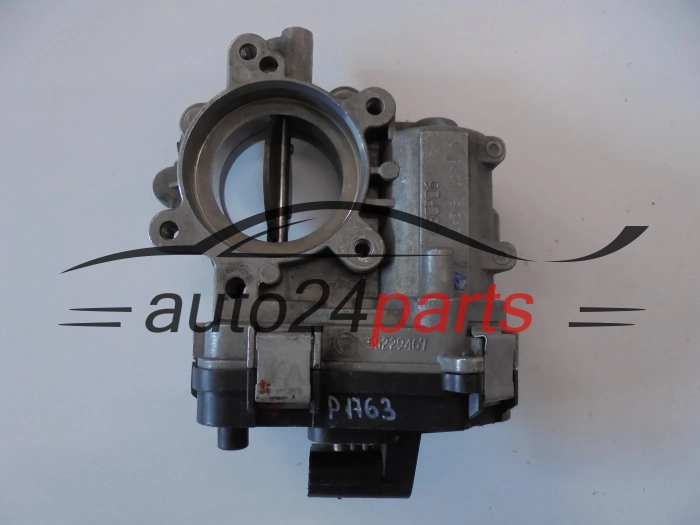
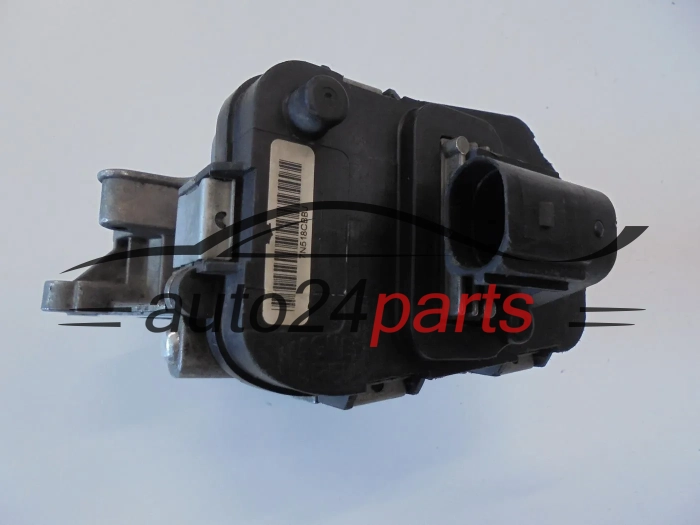
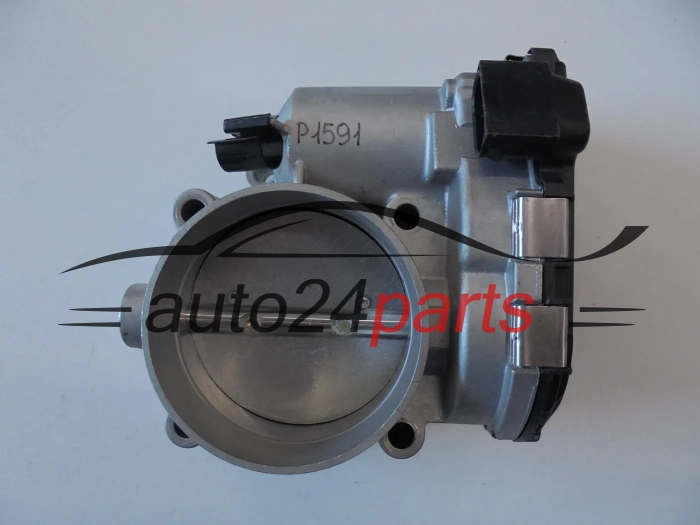
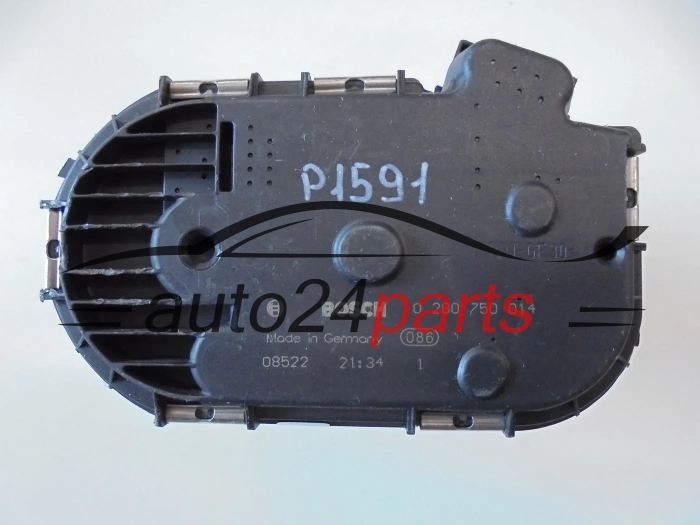
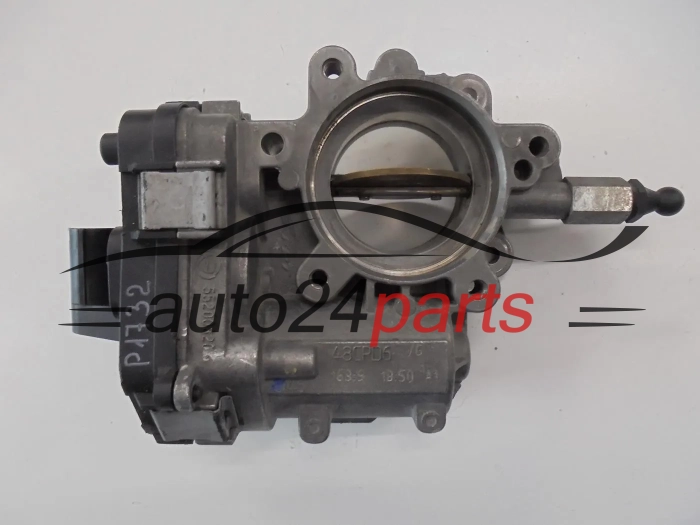
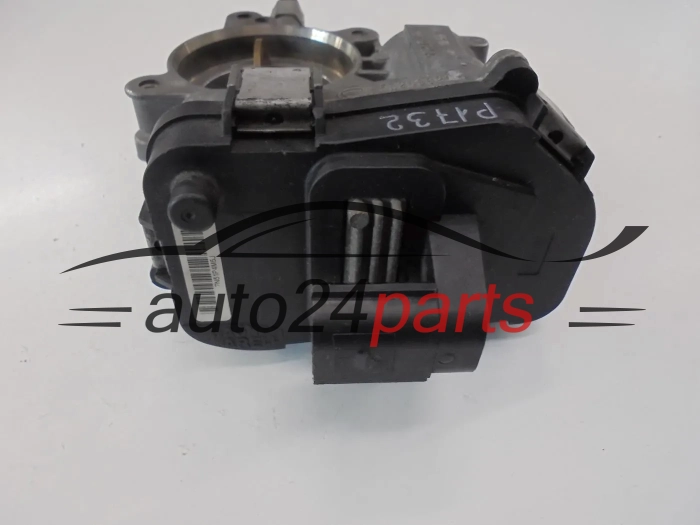


Throttle Body Audi A2 (8Z0) Seat Ibiza IV (6L) Leon (1M) VDO 408238321006 036133062L


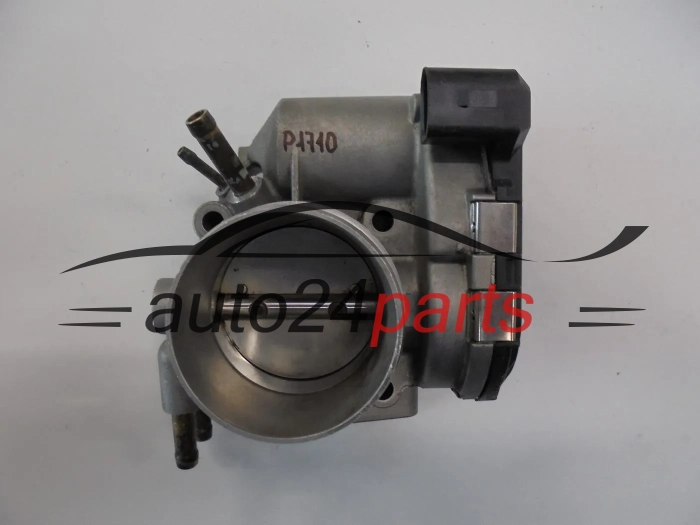
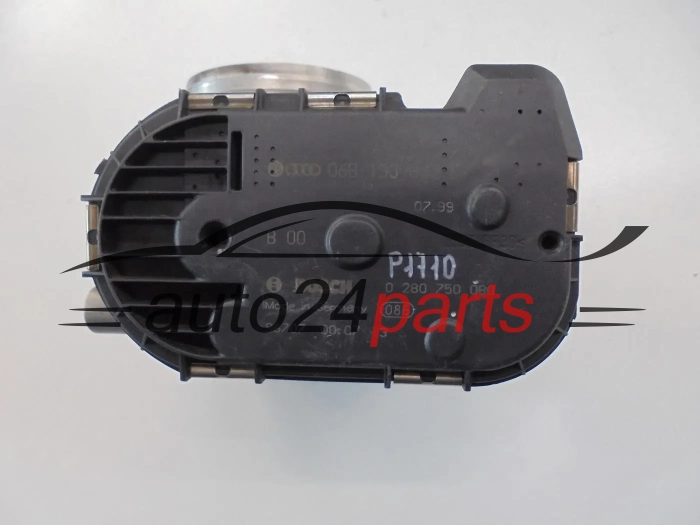
Throttle Body Audi A3 (8L) Seat Leon (1M) Toledo II (1M) VDO 408236111005 06A133066




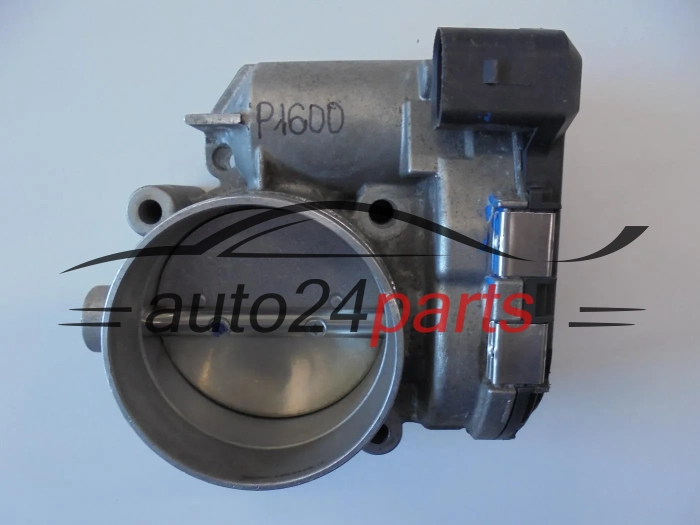
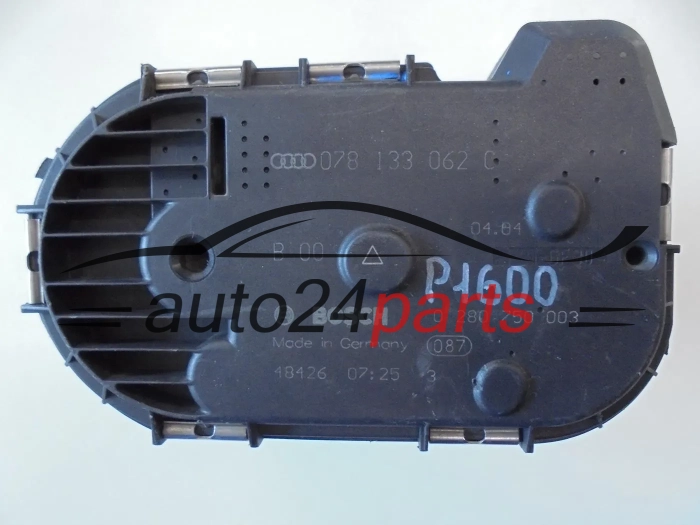
Throttle Body – Electronic and Mechanical Airflow Control
A throttle body is part of the engine intake system. Depending on the vehicle and engine design, it regulates airflow entering the engine or performs additional intake-management functions.
In petrol engines, the throttle body usually plays a direct role in controlling engine load. In diesel engines, an intake throttle or air-control flap may perform different functions, including supporting EGR operation, controlling intake airflow or helping the engine shut down smoothly.
For this reason, similar components may also be described as:
- throttle body,
- electronic throttle body,
- throttle valve,
- air intake control valve,
- intake flap,
- anti-shudder valve.
The exact function depends on the engine and intake-system design.
How to choose the correct throttle body
The most reliable way to select a replacement throttle body is to compare the numbers printed on the original component.
Check:
- the complete vehicle OEM number,
- the complete throttle body manufacturer number,
- all suffix letters and digits,
- additional identification numbers where present,
- vehicle model and engine version as supporting information.
Two throttle bodies can have an almost identical housing and connector while containing different electronics, actuator characteristics or internal calibration.
The vehicle model alone should therefore not be used as proof of compatibility.
Bosch throttle bodies – 028075... numbers
Bosch is one of the major manufacturers represented in the throttle body catalogue.
A common Bosch number family begins with 028075.... Current catalogue examples include:
- 0280750014 – Alfa Romeo / Fiat / Opel,
- 0280750073 – Alfa Romeo 147 1.6 16V,
- 0280750080 / 06B133062E – Volkswagen / Audi A4 / A6,
- 0280750134 / 06D133062 – Audi,
- 0280750167 / 06A133062AA – Volkswagen,
- 0280750222 / 92067741 – Chevrolet Captiva 2.4.
The prefix 028075 identifies a broad Bosch family and does not mean that all units are interchangeable. The complete number must be compared.
Volkswagen / Porsche – 022133062AD / VDO 408238329002
One example from the catalogue is the VW / Volkswagen / Porsche 3.2 V6 throttle body 022133062AD / VDO 408238329002.
Important references include:
- 022133062AD,
- 022 133 062 AD,
- 408238329002,
- 408 238 329 002.
This is a good example of why both the vehicle OEM number and the VDO number are useful when identifying a replacement.
VDO and Continental throttle bodies
VDO and Continental throttle and intake-control units frequently carry numbers from families such as:
- 408238...,
- 408239...,
- A2C....
These numbers should be checked together with the vehicle manufacturer's OEM reference whenever possible.
BMW – 13547625478 / Continental A2C53421758
The catalogue also includes the BMW throttle body 13547625478 / Continental A2C53421758.
Important markings include:
- 13547625478,
- 1354762547801,
- A2C53421758.
When several numbers appear on the unit, it is best to compare the complete label rather than relying on only one reference.
Audi, Volkswagen and Seat – A2C53249824
Another current example is the Audi / Volkswagen / Seat 1.9 and 2.0 TDI throttle body A2C53249824.
This type of diesel intake-control unit shows why the term “throttle body” can cover more than the traditional petrol-engine throttle valve.
Volkswagen Group A2C throttle and intake-control units
The catalogue contains several Continental / VDO units for Volkswagen Group vehicles, including:
- 059129086D / A2C53106043,
- 059129086M / A2C53308513,
- 059145950A / A2C53085614,
- 059145950H / A2C53249890,
- 03L128063K / A2C53369978.
These similar A2C references are not automatically interchangeable. The complete OEM number should be checked as well.
Magneti Marelli throttle bodies
Magneti Marelli supplied many throttle bodies used in Fiat, Alfa Romeo and other European vehicles.
Common catalogue families include:
- 40SMF...,
- 44SMF...,
- 48CPD...,
- 54CFA....
Again, the family designation alone is not sufficient to confirm compatibility.
Fiat – 55192786 / Magneti Marelli 40SMF10
A current example is the Fiat throttle body 55192786 / Magneti Marelli 40SMF10.
The key references are:
- 55192786,
- 40SMF10.
Other Magneti Marelli throttle units can look similar but carry different numbers such as 44SMF or 48CPD references.
Renault – 8200269774 / 8200272486
The catalogue also includes the Renault throttle body 8200269774 / 8200272486.
Important numbers include:
- 8200269774,
- 8200272486.
This unit is another example of a product that carries more than one useful identification number.
Throttle bodies in petrol engines
In many petrol engines, the throttle body directly controls the amount of air entering the intake manifold.
Older systems may use a mechanical cable between the accelerator pedal and throttle plate. Modern systems normally use an electronically controlled throttle actuator.
In an electronic system, the accelerator pedal sends the driver's request to the engine ECU. The ECU then controls the throttle actuator according to operating conditions and the programmed engine-management strategy.
Throttle and intake-control units in diesel engines
Diesel engines do not always use the throttle body in the same way as petrol engines.
Depending on the engine, an intake flap may be used to:
- support EGR operation,
- manage airflow,
- assist smooth engine shutdown,
- support specific emissions-control strategies.
This is why some diesel parts listed as throttle bodies may also be described as intake flaps, air-control valves or anti-shudder valves.
Electronic vs mechanical throttle bodies
A mechanical throttle body can be operated directly by an accelerator cable. An electronic throttle body normally contains an actuator motor and one or more position sensors.
Depending on the design, an electronic unit may contain:
- throttle plate or intake flap,
- electric actuator motor,
- position sensors,
- internal gears,
- electronic circuitry,
- electrical connector.
Common symptoms of a throttle body problem
Possible symptoms can include:
- unstable idle,
- engine stalling,
- poor or delayed throttle response,
- hesitation during acceleration,
- reduced engine power,
- limp mode,
- check engine warning light,
- throttle-position fault codes,
- actuator-control fault codes.
These symptoms do not automatically prove that the throttle body itself is faulty.
Can a dirty throttle body cause poor acceleration?
Yes. Carbon deposits, oil vapour and other contamination can build up around the throttle plate or intake flap and affect its movement.
Cleaning may help when contamination is the actual cause. However, cleaning cannot repair a failed actuator motor, worn gears, damaged position sensor or defective electronics.
What should be checked before replacing a throttle body?
Before replacing the component, it is worth checking:
- electrical connector condition,
- wiring and power supply,
- intake air leaks,
- related sensors,
- oil or carbon contamination,
- stored diagnostic trouble codes.
A wiring fault or intake leak may produce symptoms similar to a failed electronic throttle body.
Does a replacement throttle body require adaptation?
Not every throttle body requires the same adaptation procedure.
Depending on the vehicle, adaptation may:
- occur automatically,
- require an ignition or relearn procedure,
- require a diagnostic tool,
- not be required at all for a particular application.
The correct procedure depends on the vehicle manufacturer, engine ECU and throttle-body design.
Throttle body vs accelerator pedal sensor
The throttle body should not be confused with the accelerator pedal module.
The accelerator pedal and pedal-position sensor communicates the driver's request to the engine-management system. The ECU then decides how the electronic throttle or other engine-control systems should respond.
A fault in either component can sometimes produce similar symptoms, which is why diagnosis is important before replacing parts.
How to search for a throttle body by part number
The most effective search method combines the vehicle make with the complete OEM and manufacturer numbers.
For example:
- throttle body 022133062AD 408238329002,
- BMW throttle body 13547625478 A2C53421758,
- Fiat throttle body 55192786 40SMF10,
- Renault throttle body 8200269774 8200272486,
- Audi Volkswagen throttle body A2C53249824,
- VW throttle body 0280750167 06A133062AA,
- Audi throttle body 0280750134 06D133062,
- Volkswagen Audi throttle body 03L128063K A2C53369978.
Searching by exact numbers is usually more precise than using only the vehicle model and engine capacity.
Selected throttle bodies in the Auto24Parts catalogue
Examples from different manufacturers include the VW / Porsche VDO 408238329002 / 022133062AD throttle body, the BMW Continental A2C53421758 / 13547625478 unit, the Fiat Magneti Marelli 55192786 / 40SMF10 throttle body and the Renault 8200269774 / 8200272486 throttle body.
Related electronic car parts
- Electronic Car Parts
- Engine Control Units – ECU / ECM
- Accelerator Pedals and Pedal Position Sensors
- Vehicle Control Modules
- Bosch Automotive Electronics
- Siemens Automotive Electronics
- Magneti Marelli Parts
How to confirm compatibility before ordering
If you are unsure which throttle body is correct, contact Auto24Parts.
For compatibility verification, send:
- a clear photo of the complete original part label,
- all OEM numbers,
- manufacturer number,
- vehicle make and model,
- production year,
- engine capacity and engine code if known.
The complete numbers on the original throttle body are more reliable than the vehicle model alone.
Ordering, Payment, Delivery and Returns
Information about ordering is available in our How to Buy guide. Payment options can be found under Secure Payment Methods, while shipping information is available on the Shipping & Delivery page.
Current information about returns, complaints and warranty is available under Returns, Warranty & Complaints.
FAQ – Throttle Bodies
| Question | Answer |
|---|---|
| How do I choose the correct throttle body? | Compare the complete OEM number and manufacturer number with the original part. The vehicle model and engine version are useful supporting information but should not replace part-number verification. |
| Can two throttle bodies with the same housing be different? | Yes. Similar housings and connectors can contain different actuators, sensors, electronics or calibration. Always compare the complete numbers. |
| What do Bosch 028075 numbers mean? | 028075... is a Bosch number family used on many throttle bodies. The complete number, such as 0280750167 or 0280750080, must be checked because different versions are not automatically interchangeable. |
| What is an A2C number on a throttle body? | A2C references are commonly found on Continental / VDO electronic components. The complete A2C number should be compared together with the vehicle OEM number. |
| Can a dirty throttle body cause poor acceleration? | Yes. Deposits can restrict movement of the throttle plate or intake flap. Cleaning may help when contamination is the cause, but it will not repair damaged electronics, sensors, gears or an actuator motor. |
| Can a faulty throttle body cause limp mode? | It can. Incorrect position signals or actuator faults may cause the engine ECU to limit power. Similar symptoms can also be caused by wiring, sensors or other intake-system faults. |
| Does every throttle body require adaptation after replacement? | No. Adaptation requirements depend on the vehicle and throttle-body design. Some units relearn automatically, some require a diagnostic procedure and others may not require adaptation. |
| Is a diesel throttle body the same as a petrol throttle body? | Not necessarily. Petrol throttle bodies commonly regulate engine load directly, while diesel intake flaps may perform additional functions related to airflow, EGR operation or engine shutdown. |
| Is the accelerator pedal sensor part of the throttle body? | Usually not. The accelerator pedal module sends the driver's request to the ECU, while the throttle body is a separate actuator in the intake system. |
| Can I choose a throttle body using only the vehicle model? | No. The same vehicle model can use several throttle-body versions. Always compare the original OEM and manufacturer numbers. |
| What information should I send to confirm compatibility? | Send a clear photo of the complete original throttle body label together with the vehicle model, year and engine version. Include every visible reference number. |