







For an Astra G or Zafira A, an HSFI 2.1 Virgin ECU programmed with the Car Pass code is enough, or a three-part set. In a Corsa C or Combo with a CAN bus immobiliser, the Plug & Play set has five parts, and the ECU on its own will not start the engine without programming.
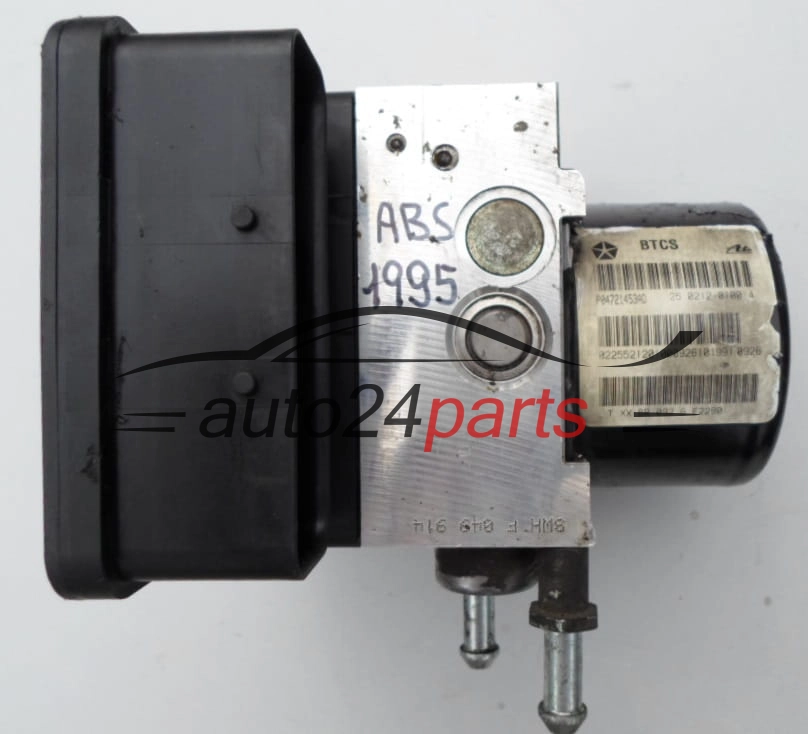
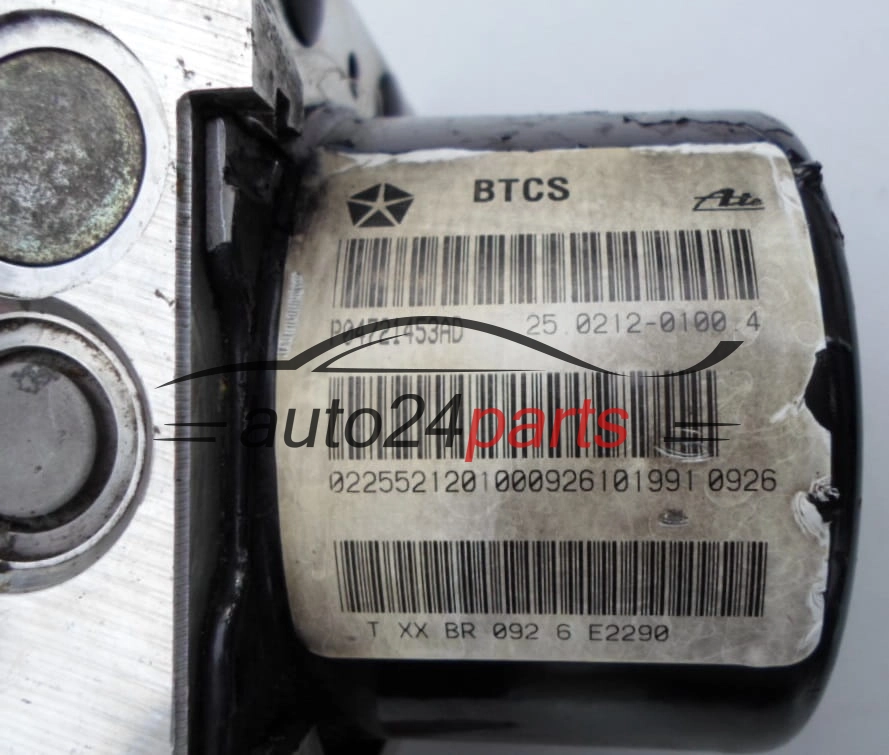
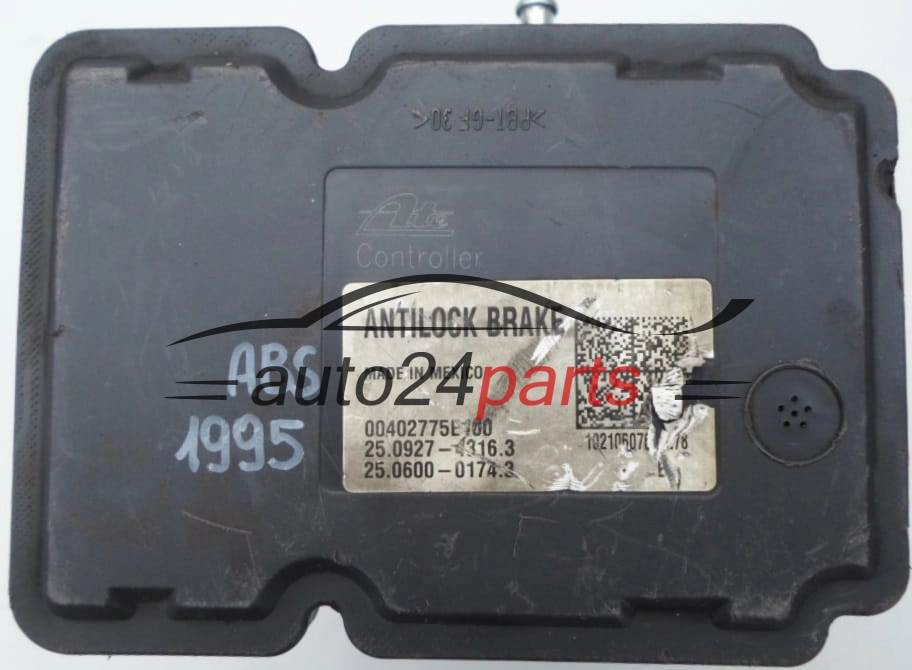
ABS pump and control module Chrysler Voyager ATE P04721453AD 25021201004 00402775E160 25092743163
Vendors's code: P04721453AD
Product code: 25092743163
Barcode:
Code 39:
ISBN:
$200.24
Price
$200.24
$246.30
Price
$246.30

Ask about the product

ABS pump and control module Chrysler Voyager ATE P04721453AD 25021201004 00402775E160 25092743163
Administratorem danych osobowych jest Auto24parts. Przetwarzamy je w celu przesłania odpowiedzi na zapytanie. Więcej informacji dotyczących przetwarzania danych osobowych znajduje się w polityce prywatności.
Shipping
from
$29.56
-
shipping
(Poland)
from
$29.56
-
shipping
(Poland)
Price 30 euros applies shipments to 5 kg on worldwide. Above this weight, please contact us by email to check price
Shipping cost for the selected product
The shipping cost applies to this product (in the selected variant - if applicable). It may change after adding other products to the cart.

Voyager: what do the numbers P04721453AD and ATE 25.0212-0100.4 tell you?
A used, working ABS unit with pump and control unit for a Chrysler Voyager. Besides the OEM number P04721453AD and two ATE numbers, we give an additional reference, 00402775E160.
Chrysler Voyager - ABS P04721453AD, ATE 25.0212-0100.4
The numbers on an ABS part are not decoration: they tell you how the control unit and hydraulic block are configured. The same housing shape can hide different versions, differing in valve tuning, connector type or electronics calibration. That is why the version is identified by the markings. The listing is for a used, genuine and working unit from a Chrysler Voyager: OEM number P04721453AD, two ATE numbers and an additional reference, 00402775E160.
Breakdown of the markings
- P04721453AD - OEM part number: P04721453AD
- 25021201004 - ATE number: 25.0212-0100.4
- 00402775E160 - additional reference given in the listing: 00402775E160
- 25092743163 - ATE number: 25.0927-4316.3
Treat the additional reference 00402775E160 as supporting information - it helps narrow down the version, but the OEM number and both ATE numbers play the main role in matching.
Symptoms for which the module is checked
Checking the ABS unit is justified if:
- the ABS warning light stays on continuously,
- the scanner shows a control unit or pump fault,
- the ABS system is switched off and does not react when braking,
- the ABS light is accompanied by a message about reduced safety systems.
Do not replace the module without ruling out the wheel sensors, wiring and power supply. After replacement the brake system must be bled, and sometimes the control unit also has to be configured with diagnostic equipment.
Selected questions
| How should I interpret the number P04721453AD? |
|---|
| It is a part number (OEM). The ending “AD” indicates a specific design and must not be left out when matching. |
| What is 00402775E160? |
| It is an additional reference given in the listing. We do not assign it a role - use it as one element of verification alongside the OEM and ATE numbers. |
| Is it enough if the beginning of the number P04721453AD matches? |
| No - the ending of the number indicates the version. Always compare the full number together with the ATE numbers. |
| What are the condition and warranty? |
| The unit is used, genuine and working, and the warranty period is given in the product features table. |
Want to check compatibility before buying? Write to us, giving the number from your own part and the VIN.

