







For an Astra G or Zafira A, an HSFI 2.1 Virgin ECU programmed with the Car Pass code is enough, or a three-part set. In a Corsa C or Combo with a CAN bus immobiliser, the Plug & Play set has five parts, and the ECU on its own will not start the engine without programming.
ABS pump and control module Audi Volkswagen Skoda Bosch 8E0614111H 0265220481 0273004286
Vendors's code: 0265220481
Product code: EB65-82187
Barcode:
Code 39:
ISBN:
Ask about the product

ABS pump and control module Audi Volkswagen Skoda Bosch 8E0614111H 0265220481 0273004286
Administratorem danych osobowych jest Auto24parts. Przetwarzamy je w celu przesłania odpowiedzi na zapytanie. Więcej informacji dotyczących przetwarzania danych osobowych znajduje się w polityce prywatności.
Shipping
from
£22.54
-
shipping
(Poland)
from
£22.54
-
shipping
(Poland)
Price 30 euros applies shipments to 5 kg on worldwide. Above this weight, please contact us by email to check price
Shipping cost for the selected product
The shipping cost applies to this product (in the selected variant - if applicable). It may change after adding other products to the cart.

What marks should you look for on the block of ABS pump 8E0614111H?
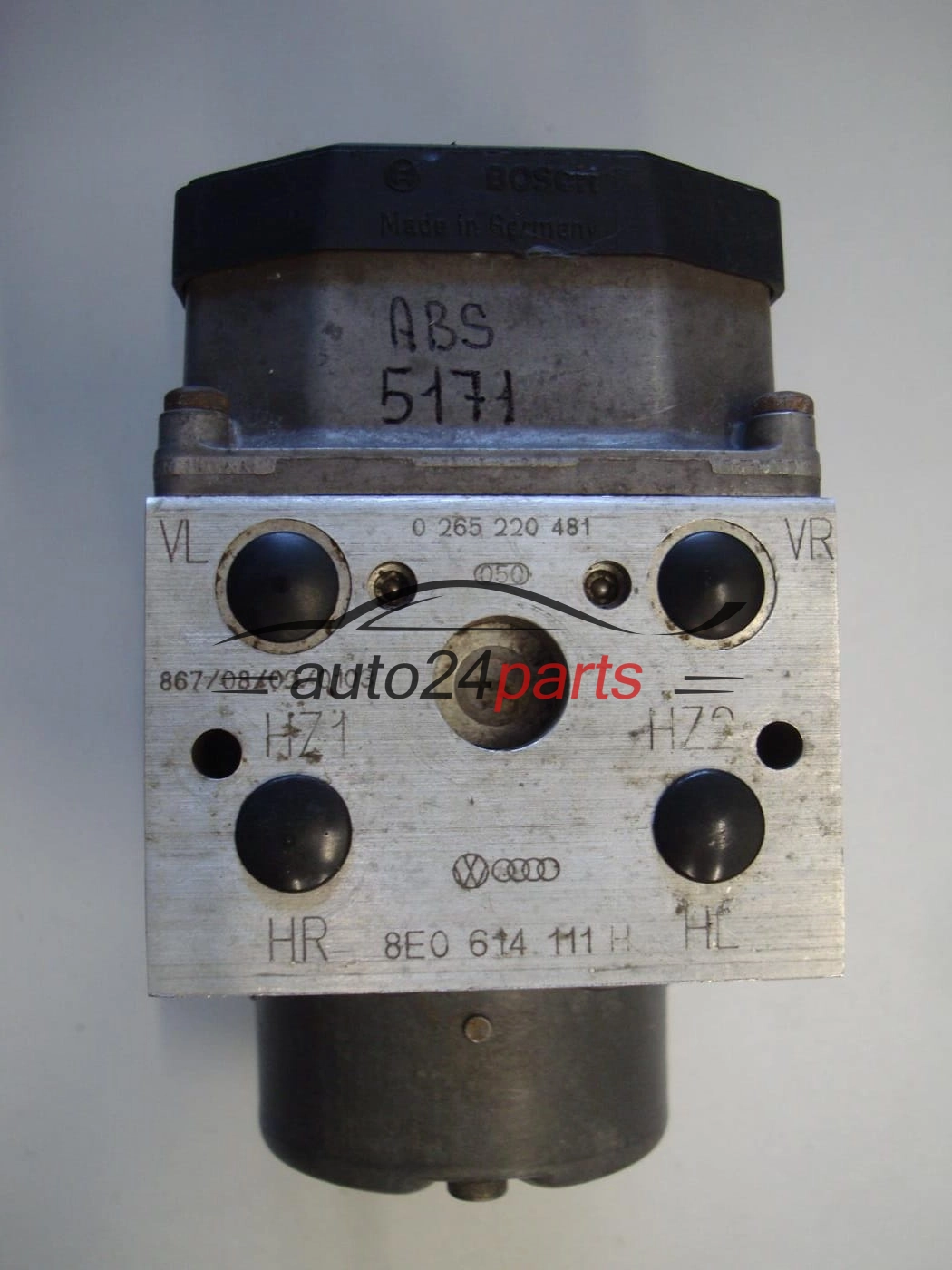
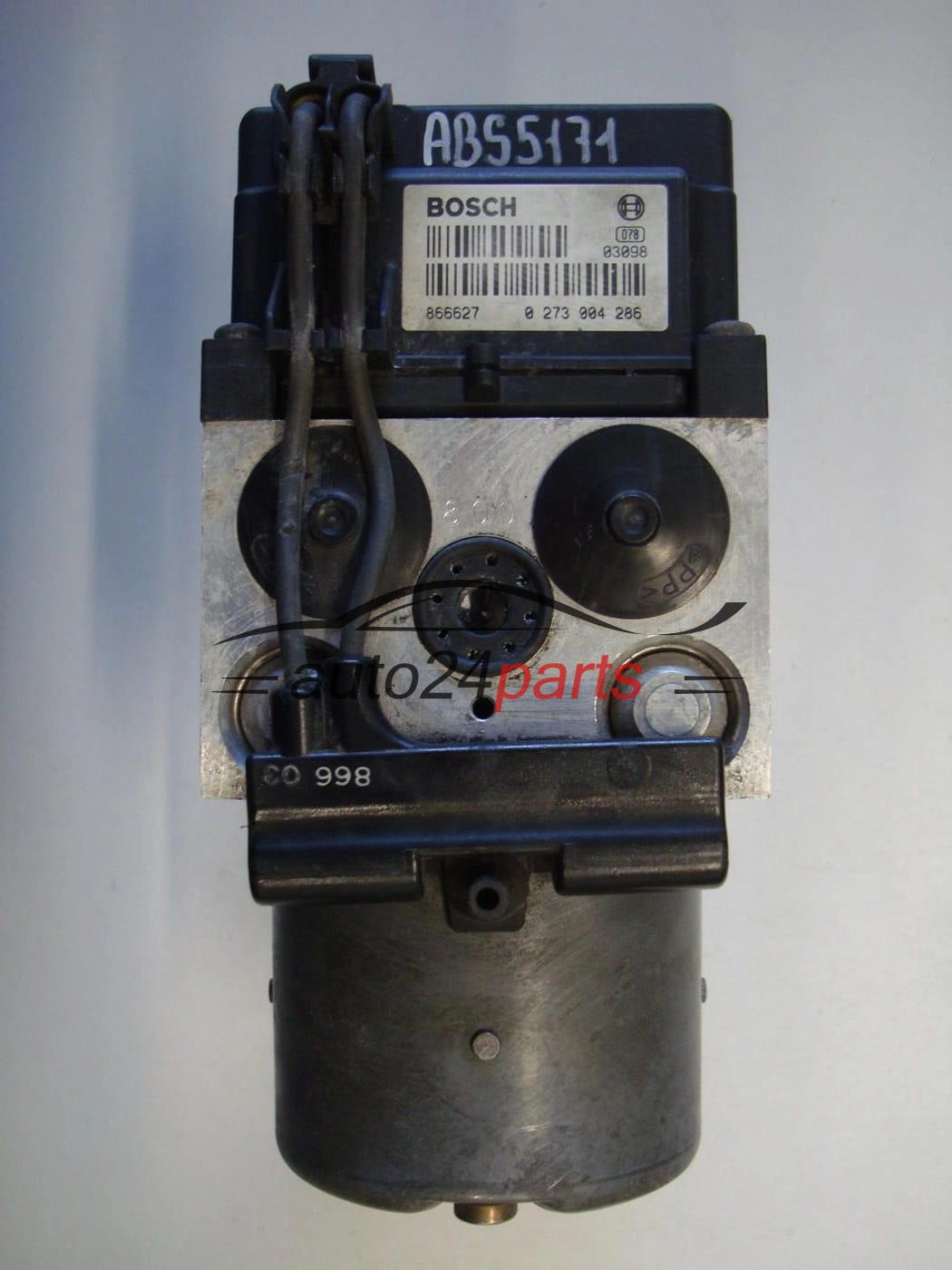
Look for number 8E0 614 111 H and Bosch number 0 265 220 481 - this is a used, working unit for Audi, Volkswagen and Skoda cars. The control module is marked Bosch 0 273 004 286.
Bosch ABS unit 8E0614111H with control module 0 273 004 286
Under hard braking, the control module compares the wheel speeds and catches the moment one of them starts to lock. It then closes or opens the valves in the block for a split second, lowering the pressure in that circuit. The pump motor then rebuilds the pressure, the wheel regains grip and the driver can still steer. This item, 8E0614111H, performs the whole cycle as a single unit.
Numbers stamped and printed on the unit
- 8E0614111H - VAG number of the ABS pump (hydraulic unit), stamped as 8E0 614 111 H
- 0265220481 - Bosch number of the hydraulic block (pump): 0 265 220 481
- 0273004286 - Bosch number of the control module, on the label: 0 273 004 286
The pump numbers are stamped into the metal of the hydraulic block; the same block has ports marked HZ1, HZ2, VL, VR, HL and HR. Here the control module has only a Bosch number, placed on the housing label. Our shop has 8 more versions of this pump with a different suffix, so compare the final letter H as well.
Symptoms that draw attention to the ABS
It is worth checking the unit if you experience:
- ABS switching off together with ESP/ASR,
- a valve fault stored by the control module,
- a warning light coming on right after the engine starts.
Before you remove the hydraulic unit, rule out a faulty wheel speed sensor, a fuse, the connector and battery voltage that is too low. After replacement the unit must be bled, and on many VW Group cars the control module must be coded with a scan tool.
Frequently asked questions
| Which makes does this pump fit? |
|---|
| Audi, Volkswagen and Skoda cars - provided the numbers match those on your block and control module. |
| Is the part in working order? |
| Yes, it is a used, genuine and working unit. The warranty period is given in the product features table. |
| Is bleeding the brakes required once the unit is fitted? |
| Yes. Replacing the hydraulic block means opening the system, so it must be bled. |
| Which number determines the selection? |
| Above all VAG number 8E0 614 111 H with its suffix. Treat the Bosch numbers of the block and control module as confirmation. |
All we need is a photo of the stamped number on your block or your car's VIN, and we will check compatibility.

