





For an Astra G or Zafira A, an HSFI 2.1 Virgin ECU programmed with the Car Pass code is enough, or a three-part set. In a Corsa C or Combo with a CAN bus immobiliser, the Plug & Play set has five parts, and the ECU on its own will not start the engine without programming.
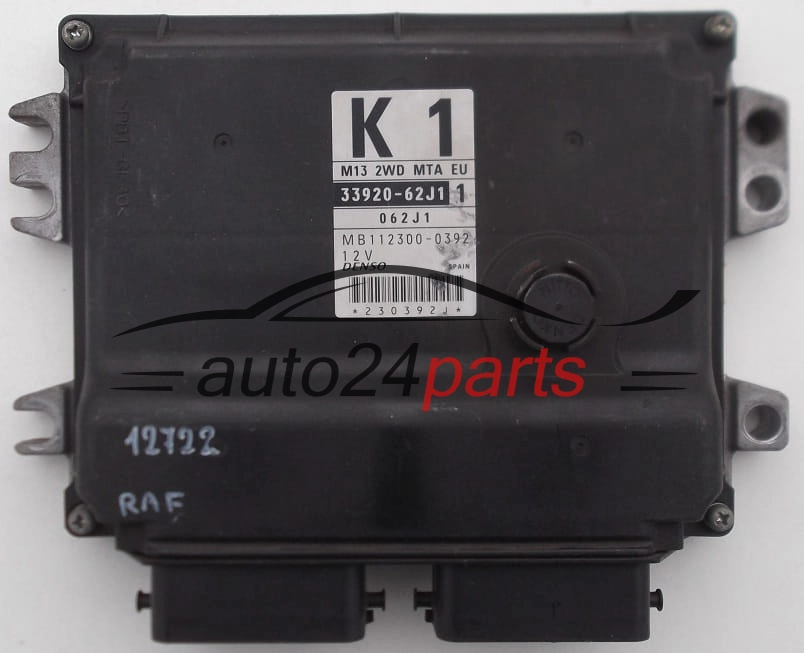
Engine control unit Suzuki Swift 1.3 Denso 33920-62J1 MB112300-0392
Vendors's code: 33920-62J1
Product code: MB112300-0392
Barcode:
Code 39:
ISBN:
1 138,21 zł
Price
1 138,21 zł
1 400,00 zł
Price
1 400,00 zł

Ask about the product

Engine control unit Suzuki Swift 1.3 Denso 33920-62J1 MB112300-0392
Administratorem danych osobowych jest Auto24parts. Przetwarzamy je w celu przesłania odpowiedzi na zapytanie. Więcej informacji dotyczących przetwarzania danych osobowych znajduje się w polityce prywatności.
Shipping
from
120,00 zł
-
shipping
(Poland)
from
120,00 zł
-
shipping
(Poland)
Price 30 euros applies shipments to 5 kg on worldwide. Above this weight, please contact us by email to check price
Shipping cost for the selected product
The shipping cost applies to this product (in the selected variant - if applicable). It may change after adding other products to the cart.

Will the 33920-62J1 ECU fit your Suzuki Swift 1.3?
This is a used Denso engine ECU in good condition, marked 33920-62J1 and MB112300-0392. We always confirm the fit against the label – choose the locked or unlocked version.
Engine control unit Suzuki Swift 1.3 Denso 33920-62J1 MB112300-0392
This used Denso 33920-62J1 engine computer for the Suzuki Swift 1.3 processes sensor signals and calculates the engine’s operating parameters. The label shows the following markings: K1, M13 2WD MTA EU, 33920-62J1, 062J1, MB112300-0392. The marking “M13 2WD MTA EU” on the label indicates the version with the M13 engine and two-wheel drive (2WD) for the European market.
Numbers on the label
- 33920-62J1 – Suzuki part number
- MB112300-0392 – Denso number
- 062J1 – additional marking
Every character must match, including the final letters. If you are not sure, send us a photo of the label.
When the ECU may be faulty
- the starter cranks but the engine does not fire,
- the diagnostic tool cannot connect to the ECU,
- an engine warning light and fault codes that remain after replacing sensors,
- signs of moisture or corrosion on the connectors or circuit board.
Before replacing the ECU, check the power supply, earths and wiring loom – a damaged wire or connector can cause similar symptoms.
Locked or unlocked?
There are two variants: locked, with the previous vehicle’s data and immobiliser, for garages, and unlocked, which we prepare before dispatch.
Not every unlocking method is possible for every ECU – it depends on the number, the software and the car’s immobiliser. Before ordering the unlocked version, ask us about the options for the 33920-62J1 ECU.
Read more about the variants on our Locked & Unlocked ECUs page.
Questions and answers
| Can I fit an ECU with a different number suffix? |
|---|
| A different suffix can mean a different software or hardware version. Send us a photo of the label and we will check whether the 33920-62J1 ECU is suitable. |
| Will the ECU start the engine straight after fitting? |
| The locked version will not – it needs programming and matching to the immobiliser. With the unlocked version it depends on the preparation method, which we agree before purchase. |
| What condition is the ECU in? |
| It is a used part, fully working and in good condition. The warranty period is shown in the product features table. |
Not sure which variant to choose? Email contact@auto24parts.com with the numbers from your label – we will check the available options.
