





For an Astra G or Zafira A, an HSFI 2.1 Virgin ECU programmed with the Car Pass code is enough, or a three-part set. In a Corsa C or Combo with a CAN bus immobiliser, the Plug & Play set has five parts, and the ECU on its own will not start the engine without programming.
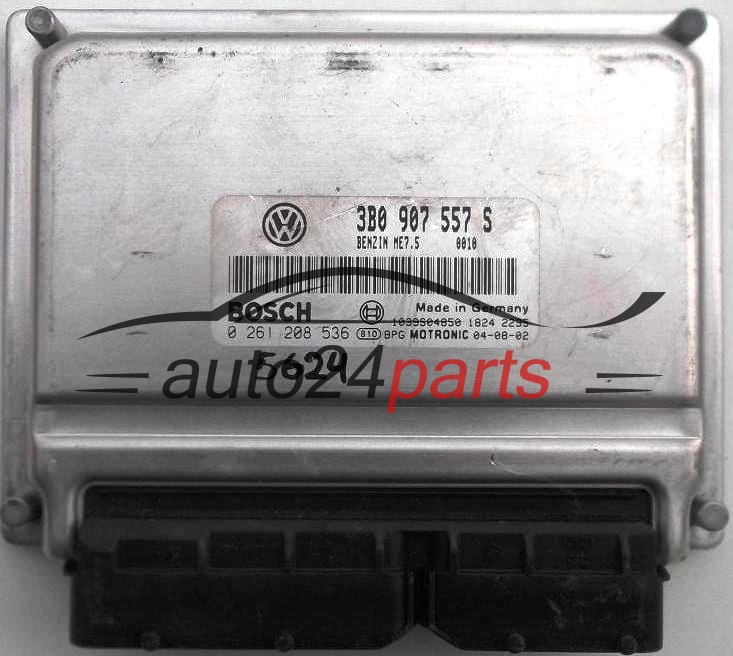
Engine Control Unit Volkswagen Bosch 3B0907557S 0261208536
Vendors's code: 0261208536
Product code: 0261208536
Barcode:
Code 39:
ISBN:
$119.50
Price
$119.50
$146.99
Price
$146.99
In stock
Select a product option:
Individual variants may differ in price
Ask about the product

Engine Control Unit Volkswagen Bosch 3B0907557S 0261208536
Administratorem danych osobowych jest Auto24parts. Przetwarzamy je w celu przesłania odpowiedzi na zapytanie. Więcej informacji dotyczących przetwarzania danych osobowych znajduje się w polityce prywatności.
Shipping
from
$29.40
-
shipping
(Poland)
from
$29.40
-
shipping
(Poland)
Price 30 euros applies shipments to 5 kg on worldwide. Above this weight, please contact us by email to check price
Shipping cost for the selected product
The shipping cost applies to this product (in the selected variant - if applicable). It may change after adding other products to the cart.

Where can you find the number 3B0907557S on the ECU?
Look for it on the sticker on the casing – next to the Bosch number 0 261 208 536. We offer this used, working petrol engine control unit in a locked or unlocked version.
Engine Control Unit Volkswagen Bosch 3B0907557S 0261208536
The part number of this ECU – 3B0907557S – has a different format from the typical 906 numbers, so it is worth comparing it character by character. Bosch gave the unit the number 0261208536 from the 0 261 series, i.e. petrol engine control units. The unit comes from a Volkswagen and is responsible for injection, ignition and engine management. It is used, in working order and in good condition.
Numbers on the sticker
- 3B0907557S – VW part number, ending S
- 0261208536 – Bosch number, shown on the label as 0 261 208 536
The sticker with the numbers is on the unit's casing. The letter S at the end of the VW number denotes the software or hardware version – a unit with a different letter may not work with your car.
Most common failure symptoms
- the engine will not start or stalls right after starting,
- uneven revs and loss of power,
- ignition or injection circuit faults even though the components are fine,
- no communication with the unit.
The first step should be to check the power supply, earths and connector – and to read the fault codes.
Locked or unlocked version?
We prepare the unlocked version before dispatch – this usually takes 1–2 working days. The locked version has the data and immobiliser of the previous car and is intended for workshops that will unlock, program and match it themselves.
Whether PIN / CAR PASS, Virgin, IMMO OFF, auto programming or clone is possible for the 3B0907557S ECU depends on the part number, software and immobiliser. Ask us before you buy and have a look at the ECU preparation options page.
Questions and answers
| Does the Bosch number 0261208536 have to match? |
|---|
| Yes, compare it together with the VW number 3B0907557S. |
| Is this an ECU for a petrol engine? |
| Yes, the Bosch 0 261 series indicates this. |
| When will you send the unlocked version? |
| Once it has been prepared, usually in 1–2 working days. |
| What condition is the unit in? |
| Used, in working order, in good condition. You will find the warranty period in the product features table. |
Send your unit's numbers to contact@auto24parts.com – we will check compatibility before you buy.
