





Ford ECU & PCM Modules – FoMoCo 12A650 Engine Controllers
Ford ECU and PCM – engine modules identified by 12A650 part numbers
Ford engine control units are often easiest to identify by the complete FoMoCo part number printed on the original module. Many Ford ECU and PCM references contain the characteristic 12A650 section, for example F1FA-12A650-ASF, AG91-12A650-KE, BV61-12A650-YC or DV21-12A650-PB. These numbers may also appear without separators, such as F1FA12A650ASF or BV6112A650YC.
Many modules also carry an additional Bosch, Continental, Visteon or other electronics manufacturer reference. Comparing both numbers is more reliable than selecting an engine computer only by Ford model or engine capacity. Depending on the ECU, different preparation options may be available, including used / locked modules, units prepared for programming and selected cloning or adaptation solutions. See our ECU preparation options.
If you are unsure which Ford ECU or PCM matches your vehicle, send Auto24Parts a clear photo of the complete original ECU label together with the model, year, engine capacity and engine version, or browse the complete engine control unit catalogue.
List of products
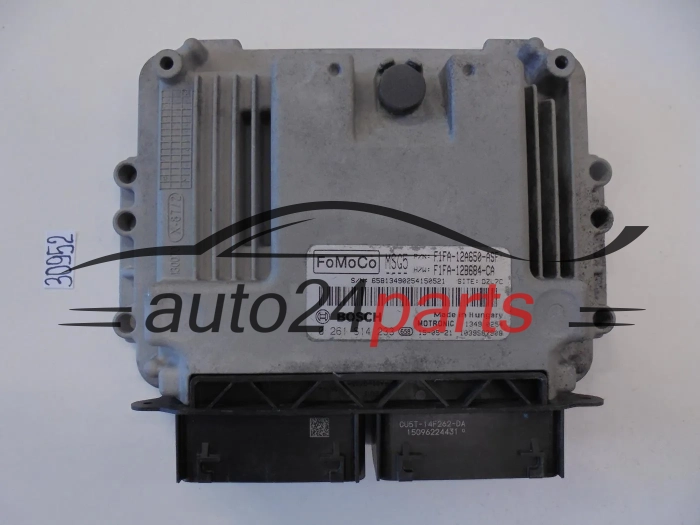
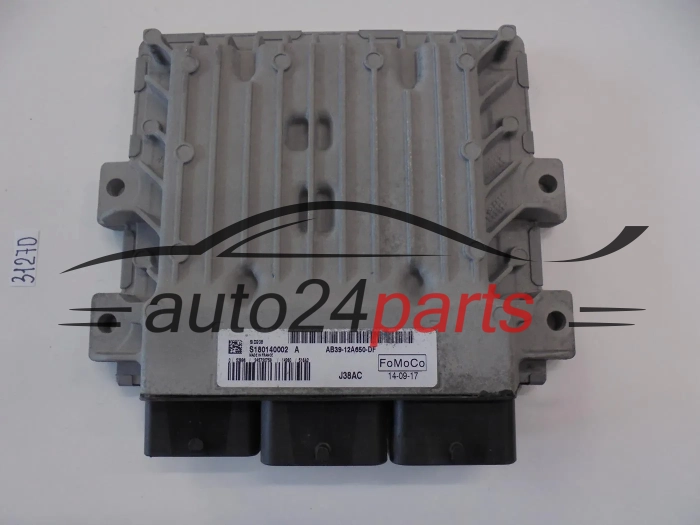
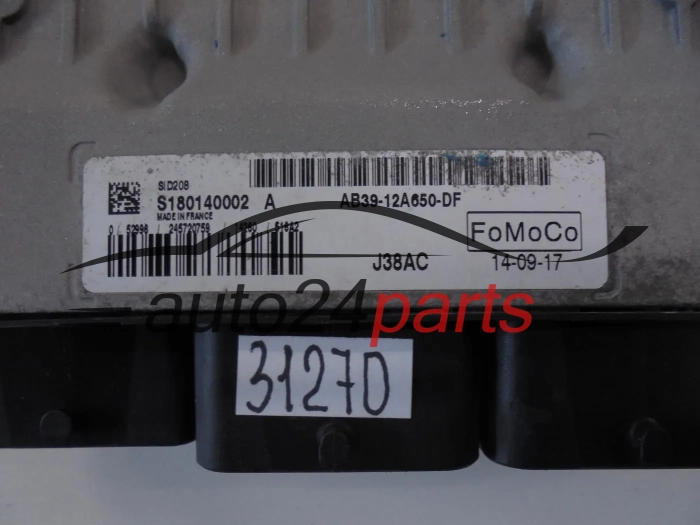
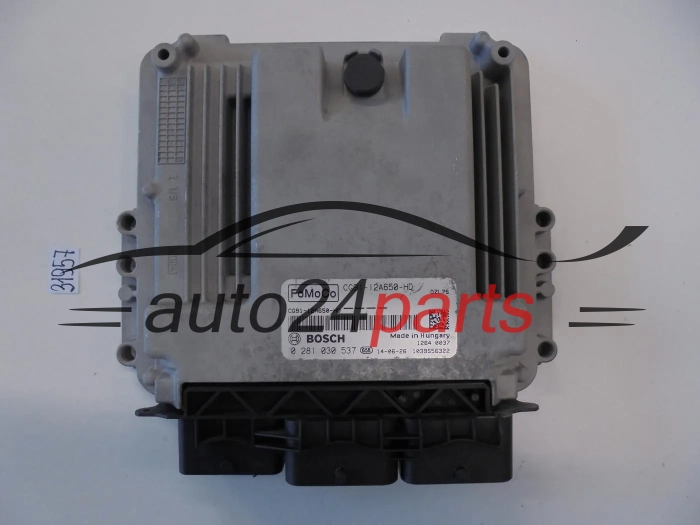
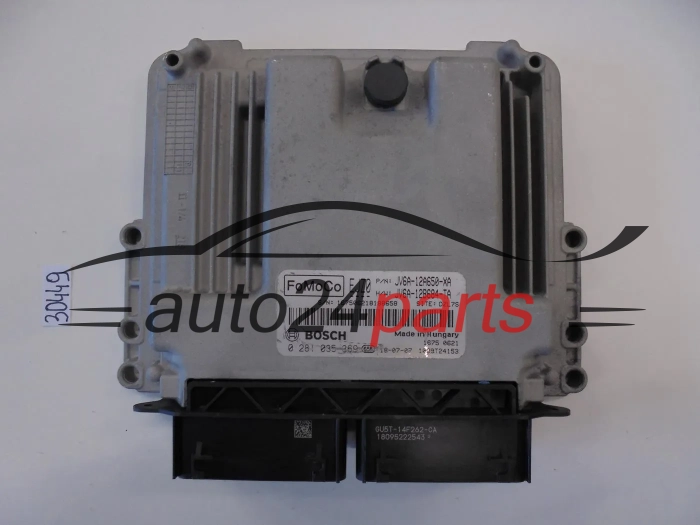
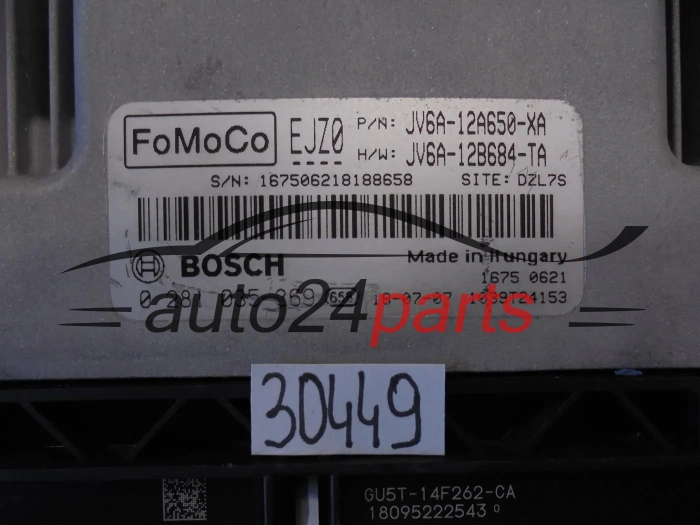
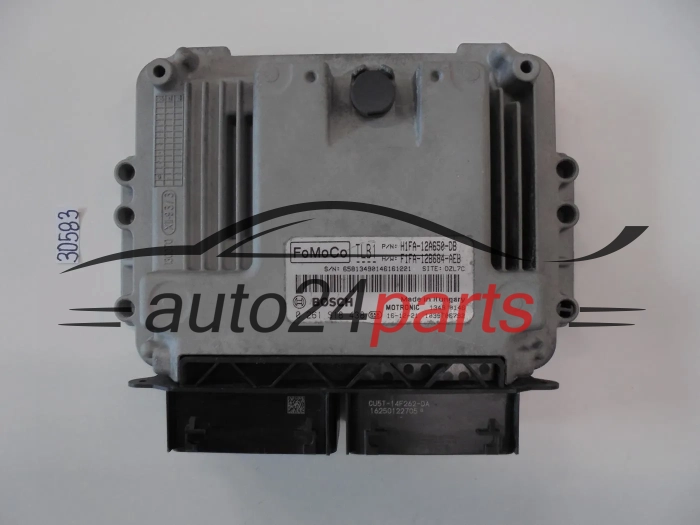
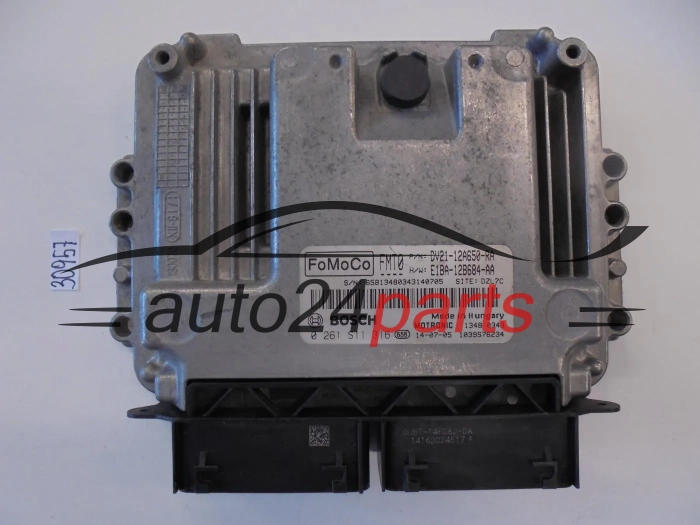
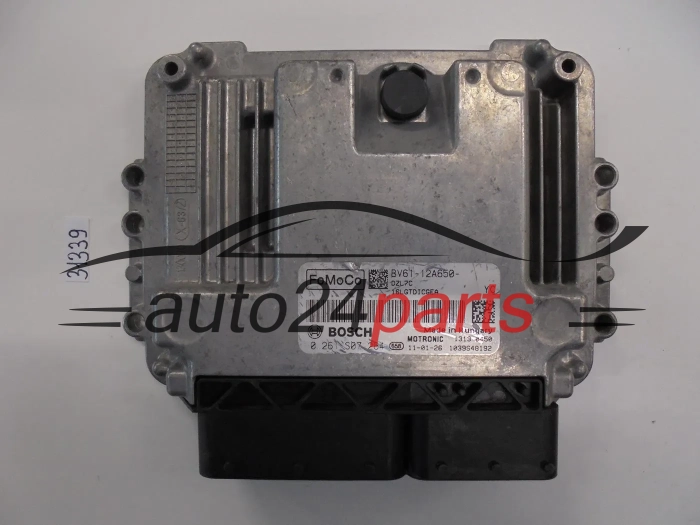
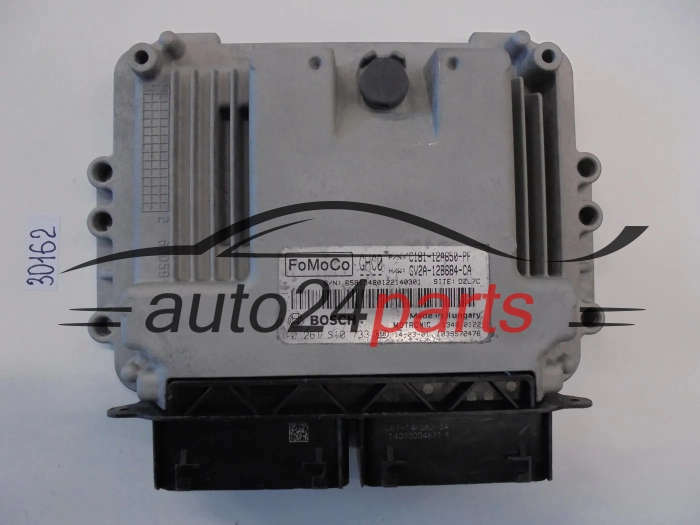
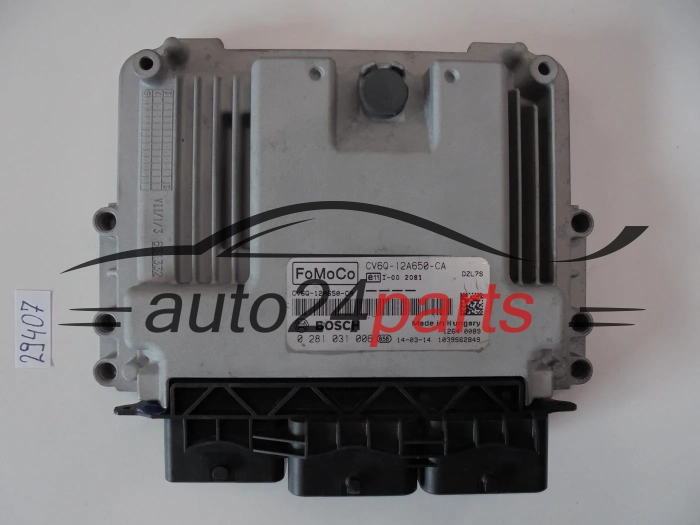
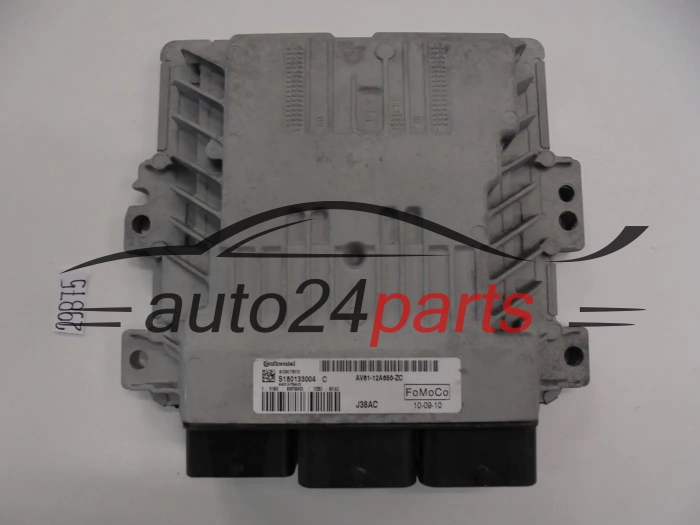
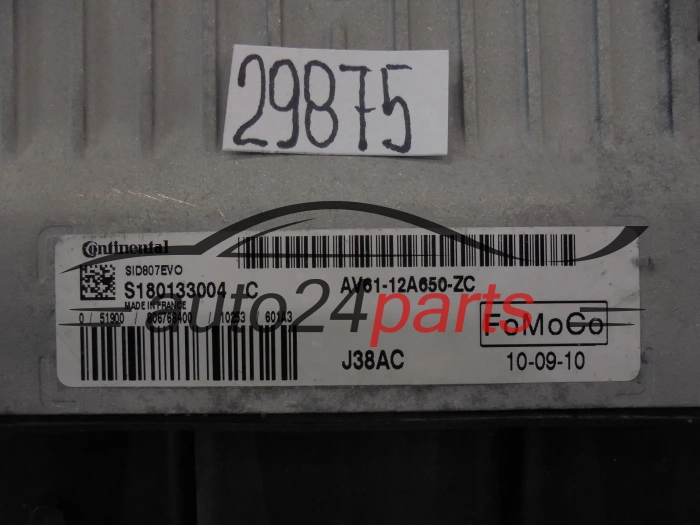
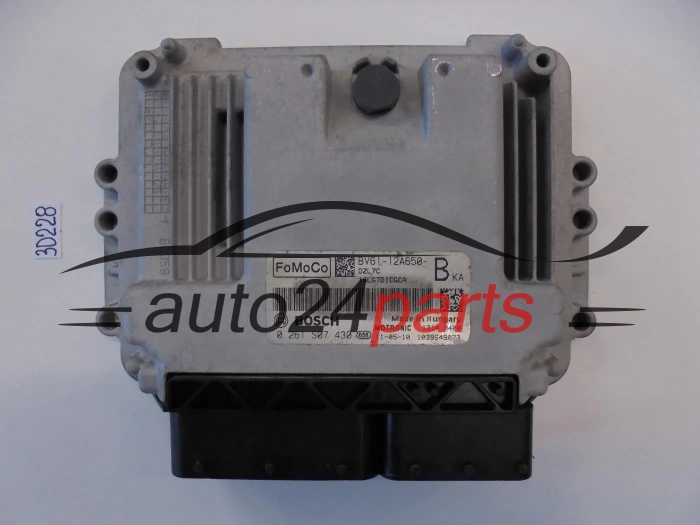
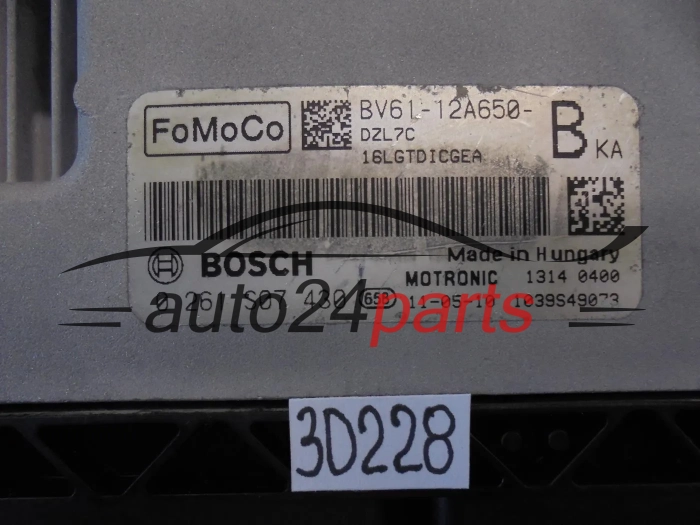
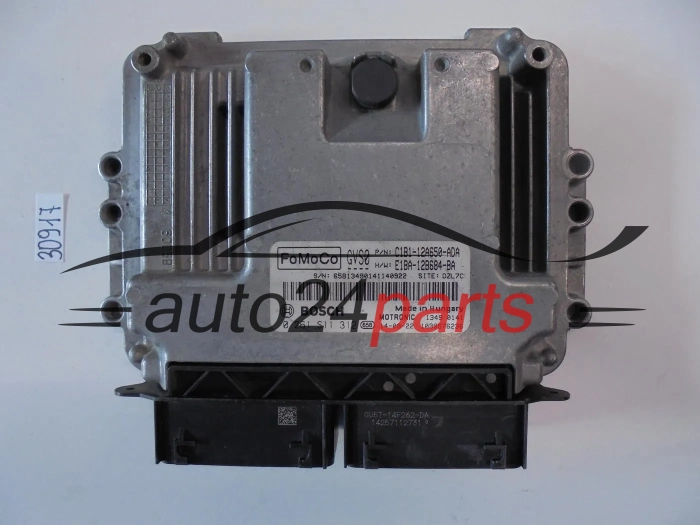
Ford ECU and PCM modules – identification by 12A650 and manufacturer number
In Ford vehicles, the engine-management computer may be described as an ECU, ECM or PCM – Powertrain Control Module. Depending on the engine and vehicle generation, the module manages functions associated with fuel injection, ignition, electronic throttle operation, turbocharger control, fuel pressure and communication with other electronic systems.
For replacement purposes, the most important task is identifying the exact Ford engine control module installed in the vehicle. Ford uses numerous ECU versions, and modules with similar housings or connectors can contain different hardware, software, calibration and security data.
Ford 12A650 ECU and PCM numbers
One of the most characteristic identification features of Ford engine control modules is the 12A650 section appearing within many Ford / FoMoCo engineering and part numbers.
Examples currently found in the Auto24Parts catalogue include:
- F1FA-12A650-ASF,
- AG91-12A650-KE,
- BV61-12A650-YC,
- BV61-12A650-BKA,
- DV21-12A650-PB,
- C1B1-12A650-PF,
- C1B1-12A650-ADA,
- H1FA-12A650-DB,
- HT11-12A650-BE.
The common 12A650 section does not mean that these modules are interchangeable. The complete prefix, suffix and additional manufacturer reference must be checked.
Ford part numbers with and without hyphens
The same Ford ECU reference can often be written in two formats. For example:
- F1FA-12A650-ASF / F1FA12A650ASF,
- AG91-12A650-KE / AG9112A650KE,
- BV61-12A650-YC / BV6112A650YC,
- DV21-12A650-PB / DV2112A650PB,
- HT11-12A650-BE / HT1112A650BE.
Both formats are useful when searching for the correct replacement ECU. Every letter and digit in the reference should be retained.
Why does a Ford ECU also have a Bosch number?
Many Ford engine control modules carry a Ford / FoMoCo identification together with a separate electronics manufacturer reference. Bosch modules, for example, may use numbers beginning with 0261S....
Current catalogue examples include:
- 0261S14233 / F1FA-12A650-ASF,
- 0261S06075 / AG91-12A650-KE,
- 0261S07264 / BV61-12A650-YC,
- 0261S07430 / BV61-12A650-BKA,
- 0261S09704 / DV21-12A650-PB,
- 0261S18890 / HT11-12A650-BE.
Using both the Ford and Bosch references provides a much more precise search than using a general phrase such as “Ford ECU”.
Ford 0261S14233 / F1FA-12A650-ASF
One current product is the Ford ECU Bosch 0261S14233 / F1FA-12A650-ASF / F1FA12A650ASF.
The Ford reference can appear both with and without separators. The Bosch number 0261S14233 provides an additional identifier that should be compared with the original ECU label.
This control unit is available with different preparation choices, including a locked version and a version prepared for programming. The appropriate variant depends on the vehicle and the work that will be carried out during installation.
Ford 0261S06075 / AG91-12A650-KE
Another available Bosch module is the Ford ECU 0261S06075 / AG91-12A650-KE / AG9112A650KE.
This is a separate Ford ECU reference and should not be selected only because another unit has a similar Bosch housing or also contains the 12A650 section.
Ford 0261S07264 / BV61-12A650-YC
The catalogue also includes the Ford Bosch ECU 0261S07264 / BV61-12A650-YC / BV6112A650YC.
The Ford number BV61-12A650-YC and Bosch reference 0261S07264 should be checked together when identifying the replacement control unit.
Ford 0261S07430 / BV61-12A650-BKA
A similar-looking but separately identified module is the Ford ECU 0261S07430 / BV61-12A650-BKA / BV6112A650BKA.
This example shows why matching only the beginning of the Ford number is not sufficient. BV61-12A650-YC and BV61-12A650-BKA have the same BV61 and 12A650 sections but different suffixes and Bosch references.
Ford 0261S09704 / DV21-12A650-PB
Another available unit is the Ford Bosch ECU 0261S09704 / DV21-12A650-PB / DV2112A650PB.
The complete DV21 reference should be retained when searching for the module. A different suffix may identify another hardware, software or calibration version.
Ford 0261S18890 / HT11-12A650-BE
The current range also includes the Ford ECU 0261S18890 / HT11-12A650-BE / HT1112A650BE.
As with other Ford modules, both the compact and formatted FoMoCo number can be useful when searching online or comparing workshop documentation.
Ford Scorpio – 89BB-12A650-A1A / 89BB12A650A1A
The Ford range also contains much older engine-management systems. One example is the Ford Scorpio ECU 89BB-12A650-A1A / 89BB12A650A1A / 9BAA.
This unit is identified as a Visteon module and demonstrates that the 12A650 designation has been used across very different generations of Ford engine electronics. The exact complete reference remains more important than the shared basic-number section.
Bosch, FoMoCo, Continental, Visteon and other Ford ECU manufacturers
Ford has used engine control modules from several electronics suppliers across different vehicle generations. The Auto24Parts catalogue includes Bosch, Continental, FoMoCo, Visteon and other original control units.
You can also browse other Bosch automotive control units.
The manufacturer name alone does not confirm compatibility. Two Bosch or Visteon modules may look almost identical while carrying different hardware, software or Ford calibration references.
Ford PCM, ECU and ECM – different terms for engine electronics
When searching for Ford engine electronics, several terms may appear: ECU, ECM, PCM, engine computer, engine control module or Powertrain Control Module.
The terminology varies by vehicle generation and documentation, but the safest way to identify a replacement remains the same: compare the complete numbers printed on the original module.
Ford PATS and replacement ECU programming
In many Ford vehicles, engine-start authorisation is linked to the PATS immobiliser system. A standard used ECU may still contain security information from its previous vehicle and therefore may require programming, adaptation or synchronisation before the engine can start.
The exact procedure depends on the vehicle generation, ECU type and how the replacement module has been prepared. For this reason, not every Ford ECU should be treated as requiring exactly the same programming procedure.
Used / locked Ford ECU
A used / locked Ford ECU or PCM normally retains data from its previous vehicle. This type of module is mainly intended for workshops and automotive electronics specialists equipped to prepare or programme replacement control units.
Depending on the ECU type, further work may include resetting, programming, security adaptation or transfer of vehicle-specific data.
Ford ECU prepared for programming
Selected Ford control units can be supplied in a version prepared for further programming. The exact preparation depends on the ECU family and the security system used by the particular vehicle.
After installation, diagnostic programming, configuration or PATS synchronisation may be required. See our ECU preparation options for more information.
Ford ECU cloning
For compatible modules, another possible solution is Ford ECU cloning. If the required data can be correctly read from the original control unit, it may be transferred to a compatible replacement module.
Depending on the ECU design, this may include relevant memory data, software, configuration, VIN and immobiliser-related information.
Cloning availability depends on the ECU type and the condition of the original module. If the required data cannot be read correctly, another preparation method may be necessary.
Why matching only 12A650 is not enough
The 12A650 section is useful because it helps identify a Ford engine-control reference, but it is not the complete part number.
For example:
- BV61-12A650-YC is not the same reference as BV61-12A650-BKA,
- DV21-12A650-PB differs from other DV21 12A650 versions,
- F1FA-12A650-ASF contains a different prefix and suffix from other Ford modules.
The prefix, basic number, suffix and additional Bosch or electronics manufacturer number should therefore be considered together.
Common symptoms that may point to a Ford ECU problem
Symptoms that appear to indicate an engine ECU fault may also be caused by sensors, wiring, power-supply problems or other vehicle systems. Diagnosis should therefore be performed before replacing the control module.
- engine does not start,
- no diagnostic communication with the ECU or PCM,
- engine stalls or is difficult to restart,
- limp mode or reduced power,
- injector or ignition-control problems,
- incorrect throttle response,
- fuel-pressure or boost-control faults,
- CAN communication errors,
- fault codes that repeatedly return,
- internal ECU memory or electronic faults.
Before replacing the module, check battery voltage, ECU power supply, ground connections, fuses, relays, connectors and wiring. A diagnostic trouble code alone does not prove that the Ford ECU is defective.
Ford engine control units by exact part number
Searching by the complete FoMoCo and electronics manufacturer references is one of the most effective ways to locate the correct Ford ECU or PCM:
- 0261S14233 / F1FA-12A650-ASF – Ford ECU
- 0261S06075 / AG91-12A650-KE – Ford ECU
- 0261S07264 / BV61-12A650-YC – Ford ECU
- 0261S07430 / BV61-12A650-BKA – Ford ECU
- 0261S09704 / DV21-12A650-PB – Ford ECU
- 0261S18890 / HT11-12A650-BE – Ford ECU
- 89BB-12A650-A1A / 89BB12A650A1A / 9BAA – Ford Scorpio ECU
How to check Ford ECU compatibility before ordering
Take a clear photo of the complete original ECU label. The Ford / FoMoCo number, Bosch, Continental, Visteon or other manufacturer reference and any hardware or software designations should all be readable.
If you need help identifying the correct module, contact Auto24Parts and send the photo together with the Ford model, model year, engine capacity, power output and engine version.
For other vehicle makes, browse the complete engine control unit catalogue. Other Ford electronic components can also be found in the Ford ABS pump category.
Before ordering, you can also review our How to Buy guide, Shipping & Delivery information and Returns, Warranty & Complaints conditions.
FAQ – Ford ECU, PCM and Engine Control Modules
| Question | Answer |
|---|---|
| What does 12A650 mean on a Ford ECU? | 12A650 commonly appears as the central section of Ford engine-control module references. It is not a complete ECU number. The prefix and suffix must also be compared, for example F1FA-12A650-ASF or BV61-12A650-YC. |
| Are F1FA-12A650-ASF and F1FA12A650ASF the same reference? | Yes. They are formatted and compact versions of the same Ford reference. The corresponding Auto24Parts product also carries Bosch number 0261S14233. |
| Is BV61-12A650-YC the same ECU as BV61-12A650-BKA? | They should not be treated as the same reference. They carry different suffixes and different Bosch numbers, so compatibility must be verified individually. |
| Why is the Bosch number important on a Ford ECU? | The Bosch reference provides an additional electronics-manufacturer identifier. Comparing it together with the complete Ford / FoMoCo number helps distinguish between similar-looking engine control modules. |
| What is the difference between Ford ECU and PCM? | Both terms are used when referring to engine-management electronics. PCM means Powertrain Control Module, while ECU is a broader term for an electronic control unit. For replacement purposes, the exact part number is more important than the terminology used. |
| Does a used Ford ECU require programming? | It depends on the ECU type and preparation option. A standard used / locked module may require programming and security adaptation, while selected modules can be prepared differently before installation. |
| What is PATS when replacing a Ford ECU? | PATS is Ford's immobiliser-related security system used in many vehicles. Depending on the model and ECU, replacement of the engine control module may require security synchronisation or another programming procedure. |
| Can a Ford ECU be cloned? | Cloning may be possible for compatible ECU types when the required information can be correctly read from the original module. Availability depends on the control-unit design and condition of the original ECU. |
| Can two Ford ECUs with identical connectors be different? | Yes. Similar connectors and housings do not confirm identical hardware, software, calibration or security data. The complete Ford and electronics manufacturer references should always be compared. |
| Can no communication with a Ford ECU be caused by something else? | Yes. Missing power or ground, damaged wiring, fuses, relays, connectors or network faults can also cause loss of communication. These should be checked before replacing the ECU. |
| What should I send to check Ford ECU compatibility? | Send a clear photo of the complete original ECU label together with the Ford model, model year, engine capacity, power output and engine version. The complete FoMoCo and manufacturer numbers should be clearly readable. |