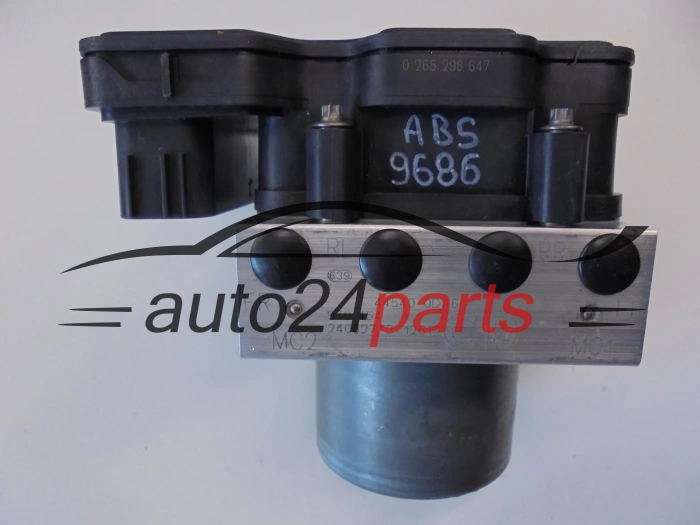
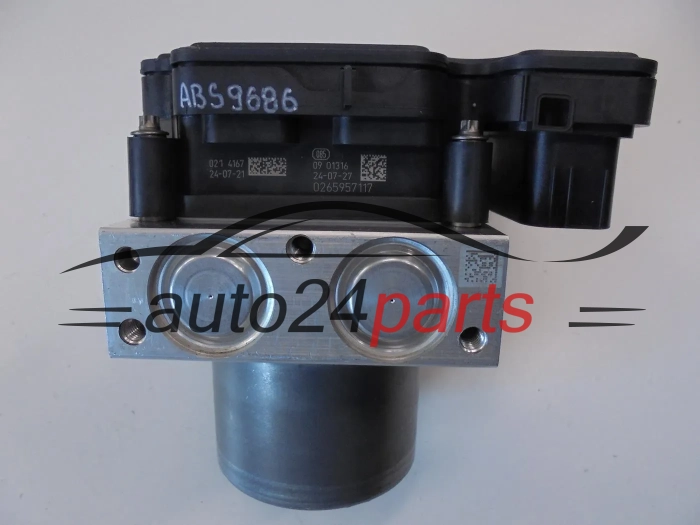
ABS pump vs ABS module - what is the difference?
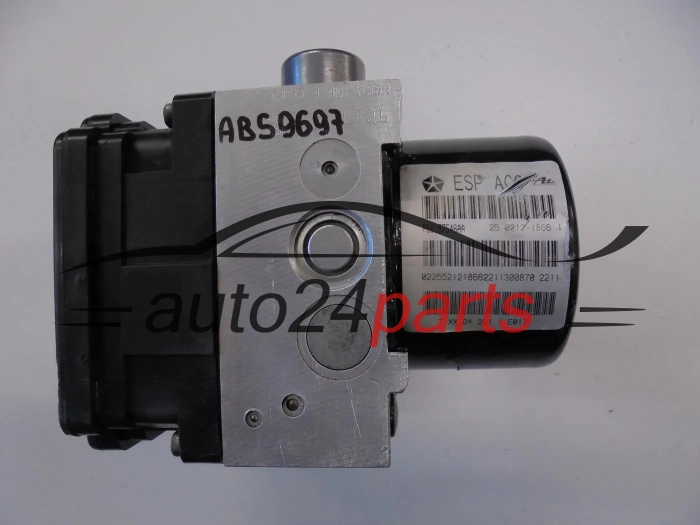
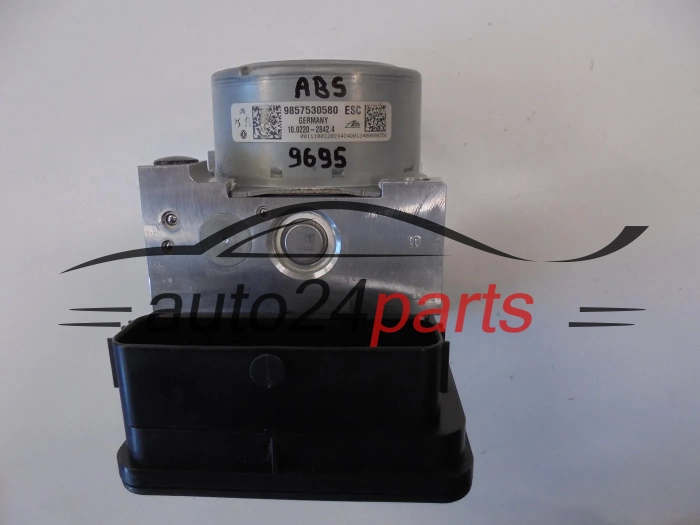
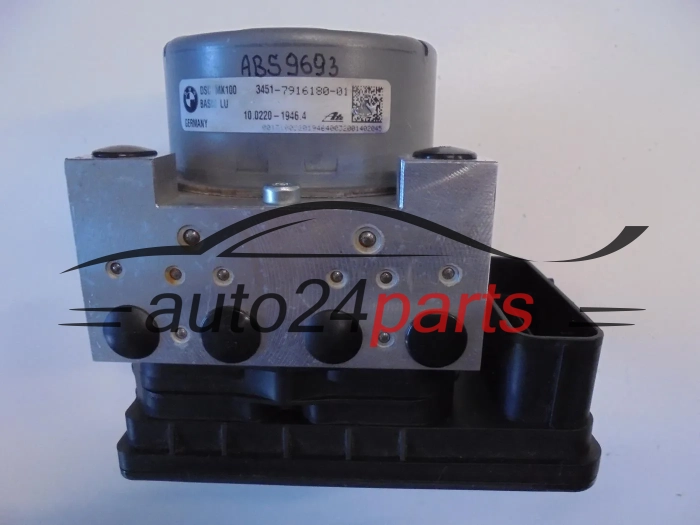
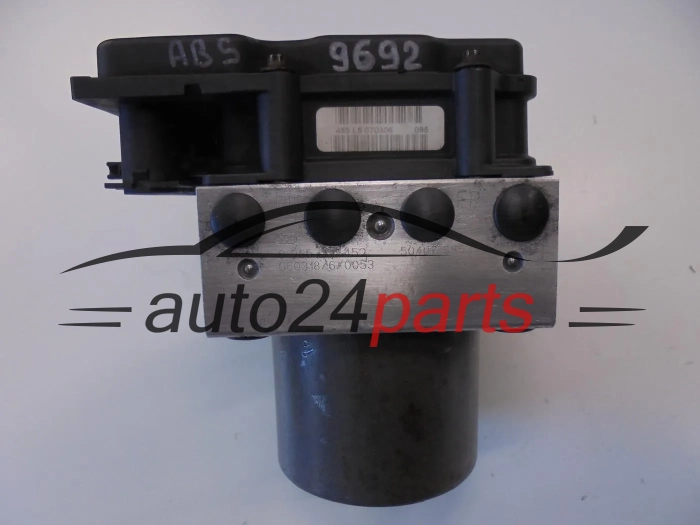
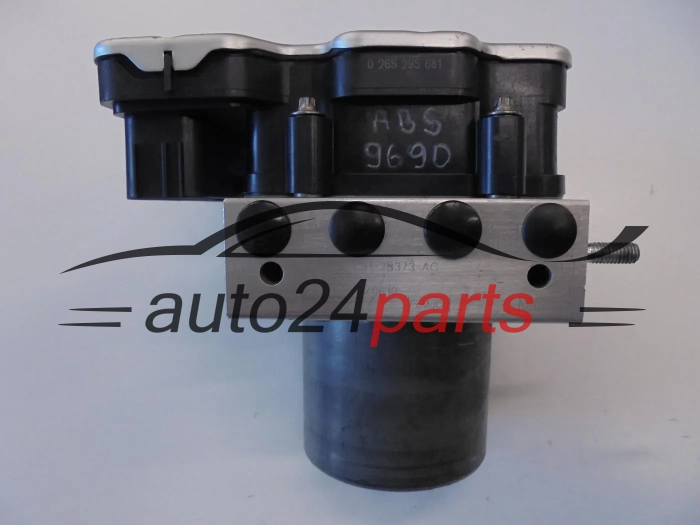
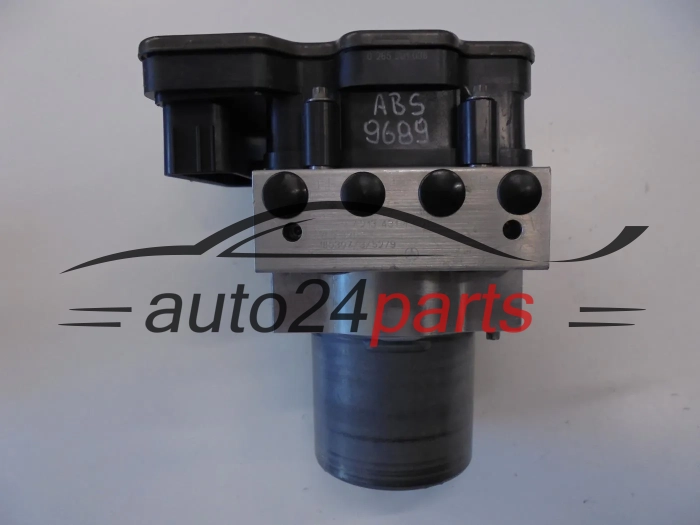
The ABS unit, often called the ABS pump module, is made up of two parts. The ABS pump, or hydraulic unit, is a metal block with valves and a small electric motor, and it regulates brake fluid pressure at each wheel. The ABS module is the electronics in a plastic housing bolted to that block: it reads the signals from the wheel speed sensors and decides when to reduce the pressure so that a wheel does not lock. On many units (e.g. Bosch, ATE) the control module can be unbolted from the block and replaced on its own, and in practice it is the electronics that fail more often than the hydraulics.
You will usually find the ABS unit in the engine bay, on the bulkhead or by the inner wing. It is easy to recognise: several metal brake pipes run into it.
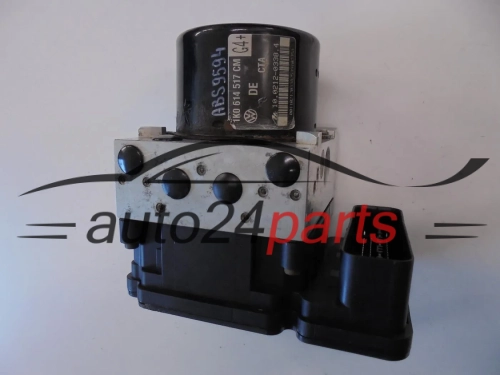
An ATE ABS unit from a Volkswagen. The metal block has ports for the brake pipes, with the black pump motor on top and the control module and its connector on the side.
ABS module and ABS pump failure symptoms
It most often starts with an ABS warning light that stays on after the engine starts or comes on while you are driving, typically together with the ESP (stability control) light. If the red brake warning light is on as well, suspicion falls on the module, because on many cars it also controls how braking force is shared between the axles. Other typical symptoms of a bad ABS module:
- faults on several wheel speed sensors at once, even though the sensors are fine;
- the diagnostic tool cannot connect to the ABS module;
- the fault comes and goes, e.g. it returns once the car has warmed up or in damp weather - typical of cracked solder joints and moisture in the electronics;
- the pump motor runs non-stop (a brief hum when you switch on the ignition is normal);
- the speedometer stops working or the power steering behaves oddly, because on some cars the speed signal goes through the ABS module.
Wheel speed sensor or ABS module? What the fault codes tell you
The ABS light is most often triggered by a wheel speed sensor (often just called an ABS sensor), not by the module. This table will help you work out what to look for:
| What the diagnostic tool or the car shows | Most likely cause |
|---|
| a fault on one sensor at one wheel | the sensor, its wiring or the reluctor ring by the wheel bearing |
| a pulsing brake pedal during gentle braking on a dry road | a wheel speed sensor or the reluctor ring - the ABS is getting a false signal |
| faults on several sensors at once, though the sensors are fine | the ABS module |
| an internal fault in the module, the pump motor or the valves | the control module or the hydraulic block |
| no communication with the ABS module | a fuse, the earth, the connector or a CAN bus wire, and only then the module |
How to check an ABS module and pump - step by step
- Read the fault codes with a diagnostic tool that supports the ABS module. The cheapest OBD code readers often only see the engine ECU. Write down the codes and their descriptions before you clear them.
- Check the fuses for the module and the pump motor; on many cars these are large blade fuses near the battery.
- Measure the power supply and earth at the connector. With the ignition on, the power pins should show around 12 V. Rust on the earth bolt is a common cause of a 'failed' module.
- Inspect the connector and the wiring loom. The unit sits low and gets water and road salt thrown at it, and green corrosion on the pins causes the same symptoms as a faulty module.
- Check the wheel speed sensors. A passive sensor (two wires, older cars) usually has a resistance of between a few hundred and around 2,000 ohms and produces an AC voltage when you turn the wheel. An active sensor can only be checked with a diagnostic tool: in live data, all the wheels should show the same speed.
- Run an actuator test if your diagnostic tool allows it. No response from the pump motor and the valves with a good power supply confirms a module fault.
If the power supply, earth, connector and sensors are all fine but the diagnostic tool still shows an internal fault or no communication, the module is faulty. When you test an ABS module with a multimeter, you will not find cracked solder joints or burnt-out transistors, and opening the housing usually only causes more damage.
No communication with the ABS module and ABS fault codes
The message 'no communication with ABS module' (code U0121 in the OBD standard) means the other control units in the car are not getting a response from the ABS. The usual culprit is a blown fuse, a poor earth or a flat battery, moisture in the connector or a broken CAN bus wire. Only condemn the module once you have ruled these out, and if the unit has had water in it, read our guide to a water-damaged or burnt-out ABS pump control module.
Codes starting with the letter C relate to the chassis, including ABS and ESP, and their meaning depends on the car manufacturer. That is why you should read the code description in the diagnostic tool rather than going by the number alone: with some manufacturers, for example, C1095 means a fault in the pump motor circuit. Codes starting with U relate to communication between control units.
Can you drive with the ABS light on?
The car will still stop, because the basic braking system works. The ABS does not, however, and usually neither does the ESP, so under hard braking on a wet or slippery road the wheels can lock and the car will no longer steer. Drive carefully and get the fault fixed as soon as possible. In the UK, an ABS warning light showing a system malfunction is a major defect under section 1.6 of the MOT inspection manual, so the car will fail its MOT until it is repaired. In Ireland, the NCT follows the EU roadworthiness testing rules, under which the same fault is a major deficiency, so the car will not pass its NCT either.
Fault confirmed - repair or replace?
Minor electronic faults, such as a cracked solder joint, can sometimes be repaired by a specialist workshop, but with no certainty about how long the repair will last. If the module has been flooded or burnt out, replacement is the only option. We explain when a repair makes sense and what it costs in our guide to ABS module repair - cost, reconditioning and whether it is worth it.
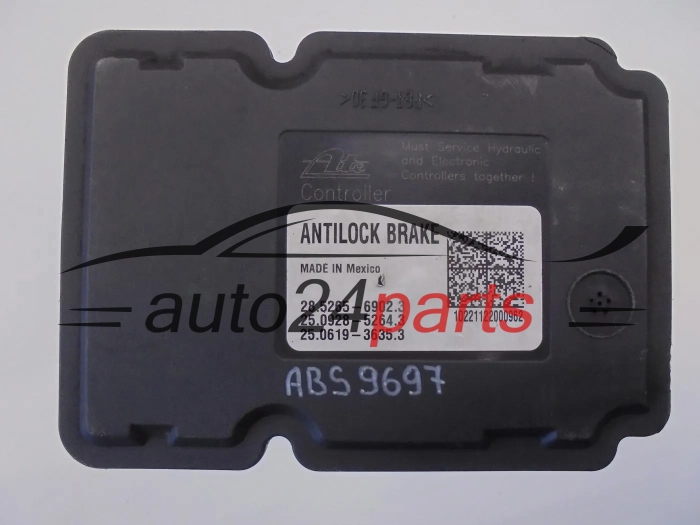
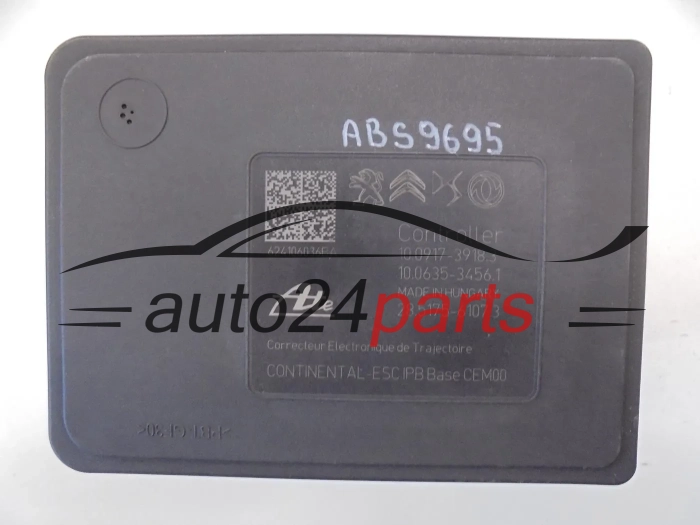
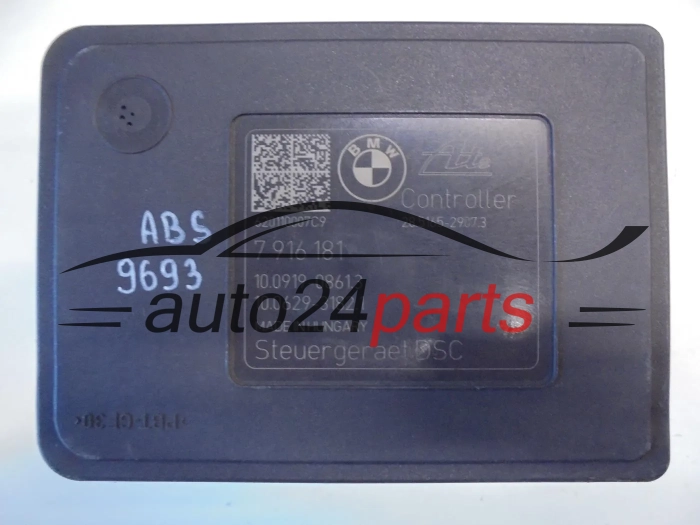
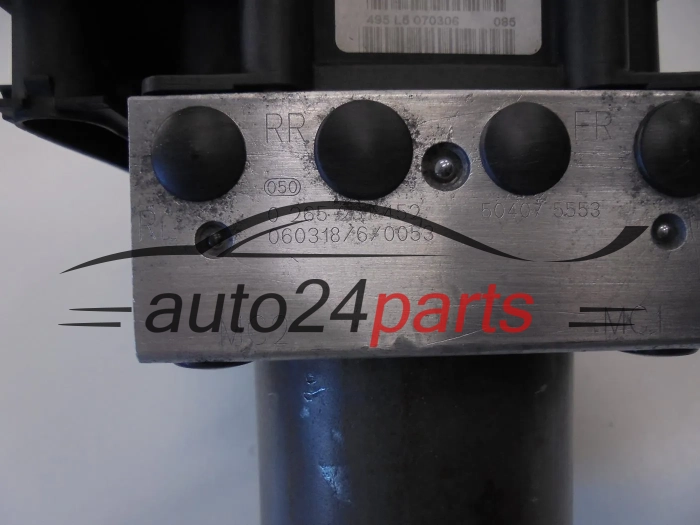
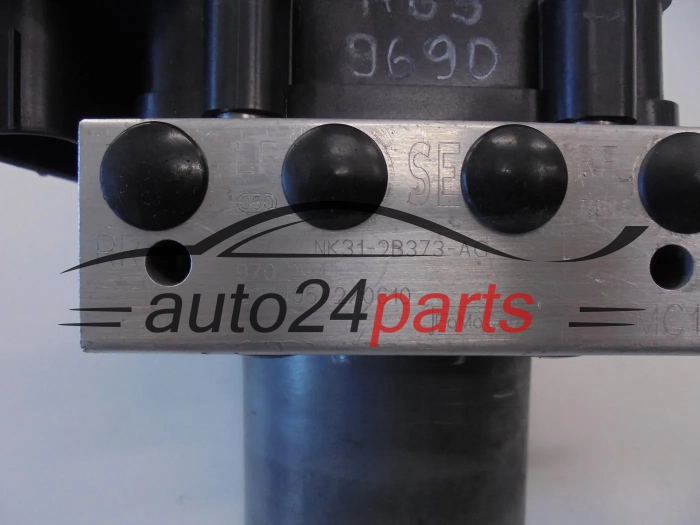
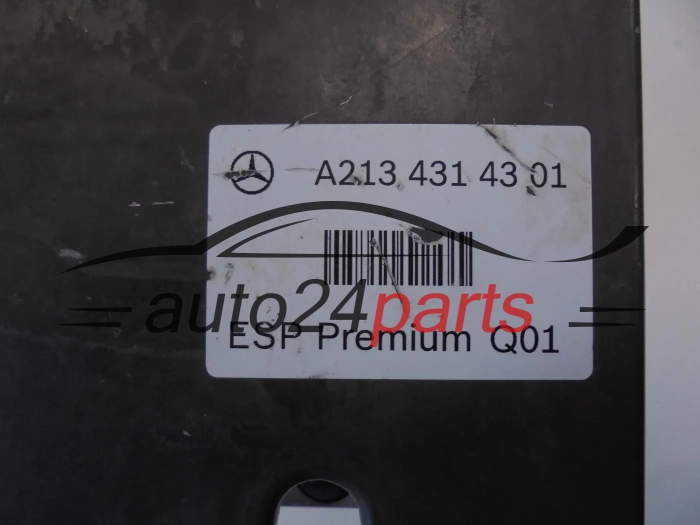
When it comes to a replacement, the number on the label is what counts. Write down the numbers of both the control module and the hydraulic block before you start looking for a part.
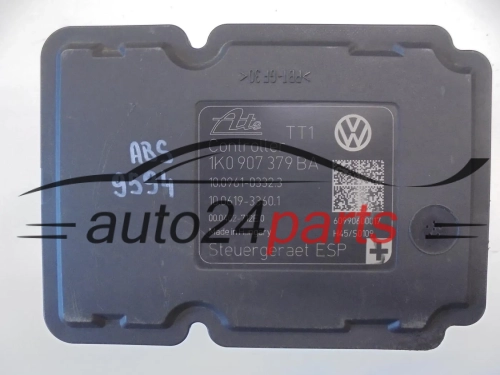
The label on an ATE control module from a Volkswagen. The module number, 1K0 907 379 BA, is different from the hydraulic block number, so write down both.
We mainly sell used, original ABS pumps and ABS modules. Before dispatch, every part is checked on a test bench: electrically, electronically, visually and mechanically. Used parts come with a 6-month warranty, and you can return a part within 14 days of receiving the parcel (warranty and returns policy).
Not sure which module fits? Email a photo of the control module label and the numbers from the hydraulic block to contact@auto24parts.com and we will check compatibility before you buy. We ship by DHL Express or FedEx Express, and delivery within Europe, including the UK and Ireland, usually takes around 1-2 working days from dispatch. You will see the exact shipping cost at checkout once you enter your address. The UK is outside the EU, so customs duties and import charges may be payable by the recipient (shipping and delivery).
Frequently asked questions
Does a replacement ABS module need coding?
On many cars, yes: the module has to be coded to the car's equipment (e.g. gearbox type, ESP) with a diagnostic tool. On some older cars it is enough to plug in a module with matching numbers.
Do the brakes need bleeding after replacement?
When you replace the whole pump with the hydraulic block, yes, and on many cars this is done with a diagnostic tool. When you replace only the control module, the hydraulic system stays sealed, so bleeding is usually not needed.
Can you test an ABS pump motor with a direct 12 V feed?
Putting 12 V straight onto the pump motor only shows whether the motor turns. It does not test the valves or the electronics, and getting the pins wrong can damage the module. It is safer to run an actuator test with a diagnostic tool.
Legal position as of 6 November 2026: Directive 2014/45/EU on periodic roadworthiness tests for motor vehicles and their trailers, Annex I, point 1.6, and Article 9; in the UK, the MOT inspection manual for private passenger and light commercial vehicles, section 1.6. AI tools were used in preparing this text.