







For an Astra G or Zafira A, an HSFI 2.1 Virgin ECU programmed with the Car Pass code is enough, or a three-part set. In a Corsa C or Combo with a CAN bus immobiliser, the Plug & Play set has five parts, and the ECU on its own will not start the engine without programming.
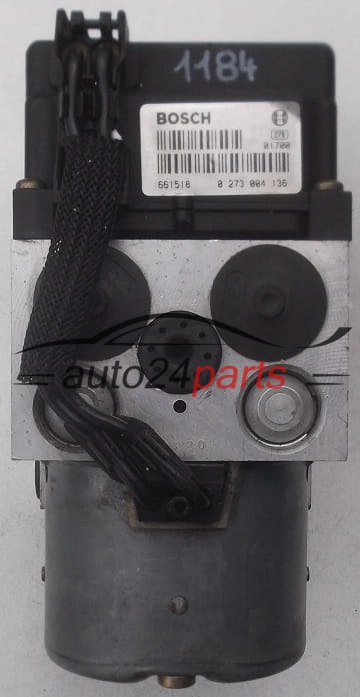
ABS pump and control module Alfa Romeo 156 Bosch 0265216401 46513088 0273004136
Vendors's code: 0273004136
Product code: 46513088
Barcode:
Code 39:
ISBN:
325,20 zł
Price
325,20 zł
400,00 zł
Price
400,00 zł

Ask about the product

ABS pump and control module Alfa Romeo 156 Bosch 0265216401 46513088 0273004136
Administratorem danych osobowych jest Auto24parts. Przetwarzamy je w celu przesłania odpowiedzi na zapytanie. Więcej informacji dotyczących przetwarzania danych osobowych znajduje się w polityce prywatności.
Shipping
from
120,00 zł
-
shipping
(Poland)
from
120,00 zł
-
shipping
(Poland)
Price 30 euros applies shipments to 5 kg on worldwide. Above this weight, please contact us by email to check price
Shipping cost for the selected product
The shipping cost applies to this product (in the selected variant - if applicable). It may change after adding other products to the cart.

How do you select an ABS unit for an Alfa Romeo 156 by number 0265216401?
Start with the symptoms and the fault codes from the tester, and finish with the numbers 0265216401, 46513088 and 0273004136. The unit is used, working and original.
Alfa Romeo 156: ABS 0265216401 / 46513088 - from diagnosis to comparison
The title of the listing mentions the Alfa Romeo 156, and only that model do we regard as confirmed. The unit includes the ABS pump and control module. Condition: used, working, original. Below we describe the route from noticing the symptoms, through checking the basic components, to comparing the numbers. You will also come across the same Bosch number 0265216401 and OEM 46513088 in other listings, so what tells them apart is the third number: 0273004136.
The numbers - the end point of the check
- 0265216401 - Bosch number: 0265216401
- 46513088 - part number (OEM): 46513088
- 0273004136 - Bosch number: 0273004136
It is 0273004136 that sets this listing apart from the others with the pair 0265216401 and 46513088. If your part has a different third number, you are probably looking for a different variant. So check it separately, without relying on the first two.
At the start of the journey: signals from the car
With the Alfa Romeo 156, drivers usually reach for such a unit when:
- the ABS warning light is on despite the main brakes working properly,
- after the key is turned the pump can be heard running briefly, and then a fault appears,
- the fault remains after being cleared and comes back after a short drive,
- the tester does not connect to the ABS control module.
Go to a diagnostic specialist with a specific question: do the stored fault codes point to the module, or to the sensors or wiring? Do not replace the unit without such an answer. Once the decision is made, plan for bleeding the brakes after fitting and ask whether coding will be needed.
Selection in brief
| What sets this listing apart from others with number 0265216401? |
|---|
| The third number: 0273004136. The other two may be repeated across different variants. |
| Is 156 the only confirmed model? |
| Yes, in this listing we confirm only the Alfa Romeo 156. The final selection comes down to the numbers anyway. |
| Which numbers are from Bosch? |
| Those starting with 0265 and 0273. We give number 46513088 as the part number (OEM). |
| What if only one number matches? |
| Do not treat that as certainty. Send us the numbers from your part and we will compare them with the whole list. |
Before you order, copy the three numbers from your part and send them to us. We will match them against the entries on the list.

