







For an Astra G or Zafira A, an HSFI 2.1 Virgin ECU programmed with the Car Pass code is enough, or a three-part set. In a Corsa C or Combo with a CAN bus immobiliser, the Plug & Play set has five parts, and the ECU on its own will not start the engine without programming.
ABS pump BMW Bosch 3451678305601 3451678012602 0265250200 0265960300
Vendors's code: 6783056
Product code: 6780126
Barcode:
Code 39:
ISBN:
$179.26
Price
$179.26
$220.49
Price
$220.49

Ask about the product

ABS pump BMW Bosch 3451678305601 3451678012602 0265250200 0265960300
Administratorem danych osobowych jest Auto24parts. Przetwarzamy je w celu przesłania odpowiedzi na zapytanie. Więcej informacji dotyczących przetwarzania danych osobowych znajduje się w polityce prywatności.
Shipping
from
$29.40
-
shipping
(Poland)
from
$29.40
-
shipping
(Poland)
Price 30 euros applies shipments to 5 kg on worldwide. Above this weight, please contact us by email to check price
Shipping cost for the selected product
The shipping cost applies to this product (in the selected variant - if applicable). It may change after adding other products to the cart.

Will ABS pump 3451678305601 fit your BMW?
Used original ABS module with number 3451678305601 for BMW. Confirm compatibility with the number from your original pump.
How to identify ABS pump 3451678305601 for your BMW
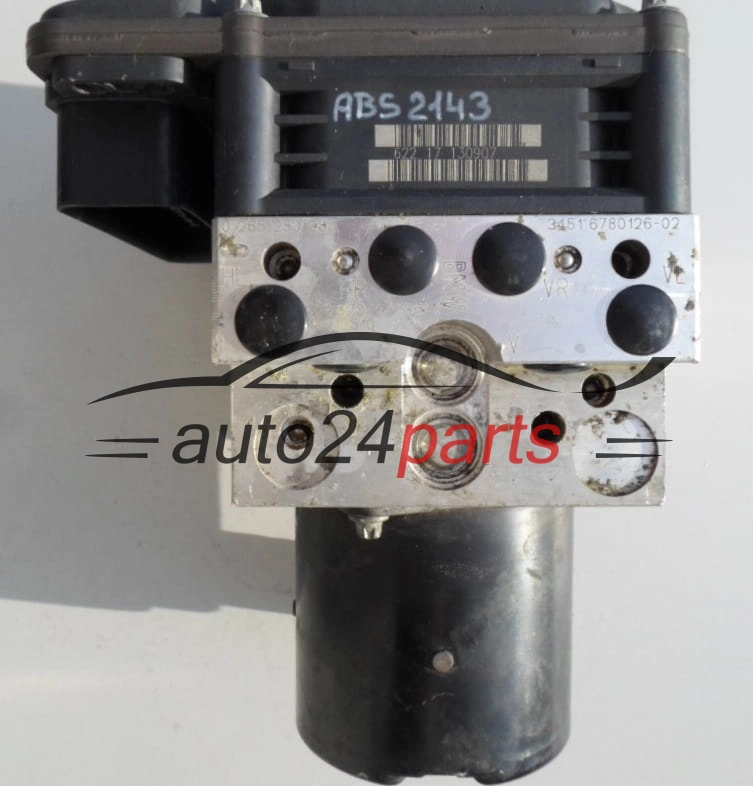
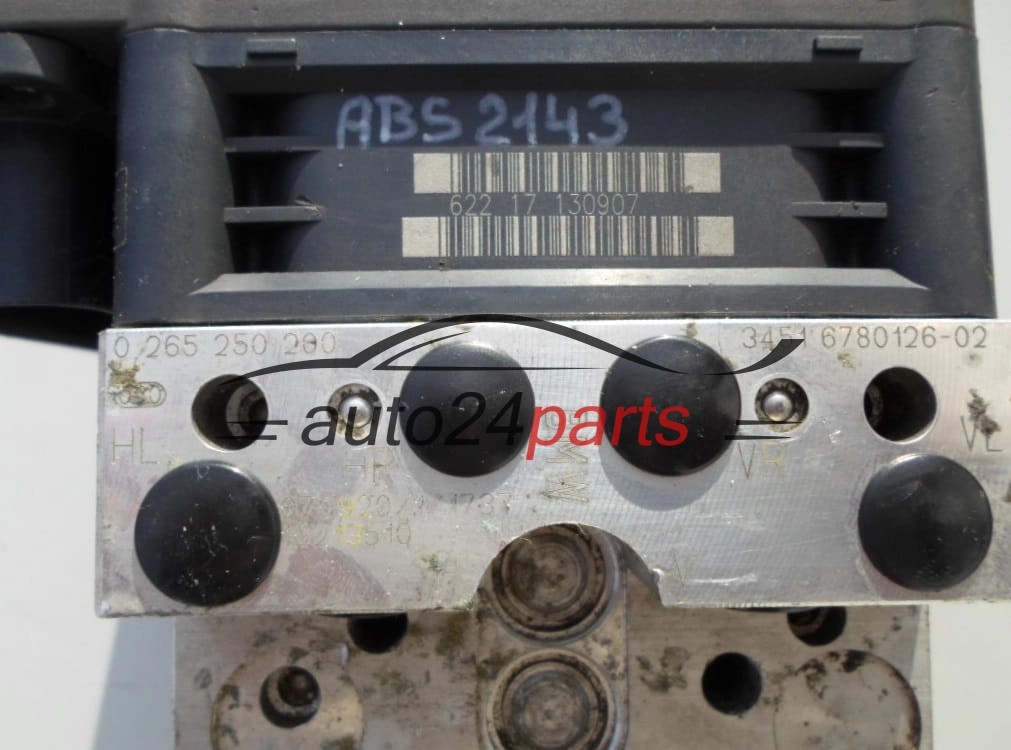
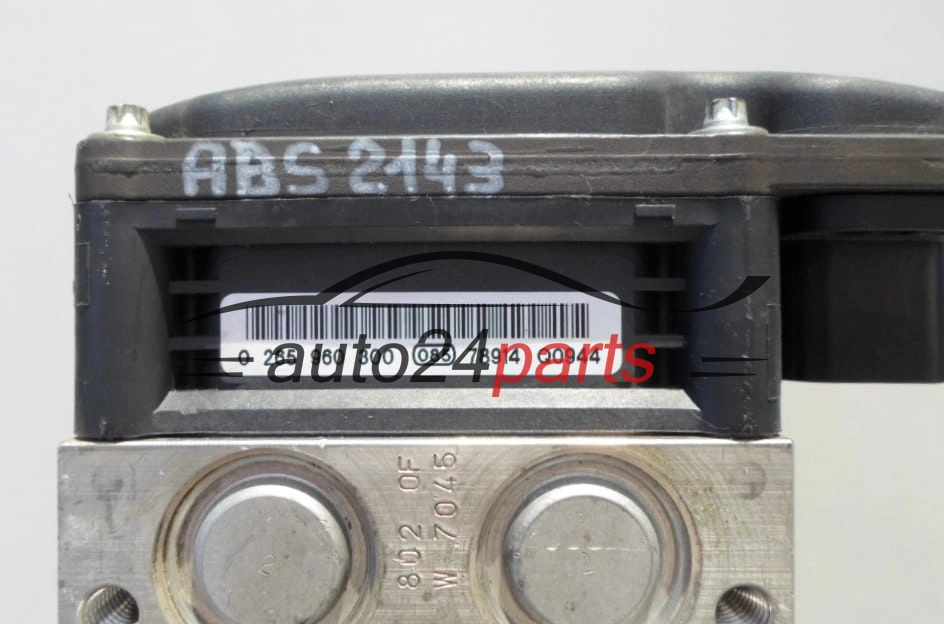
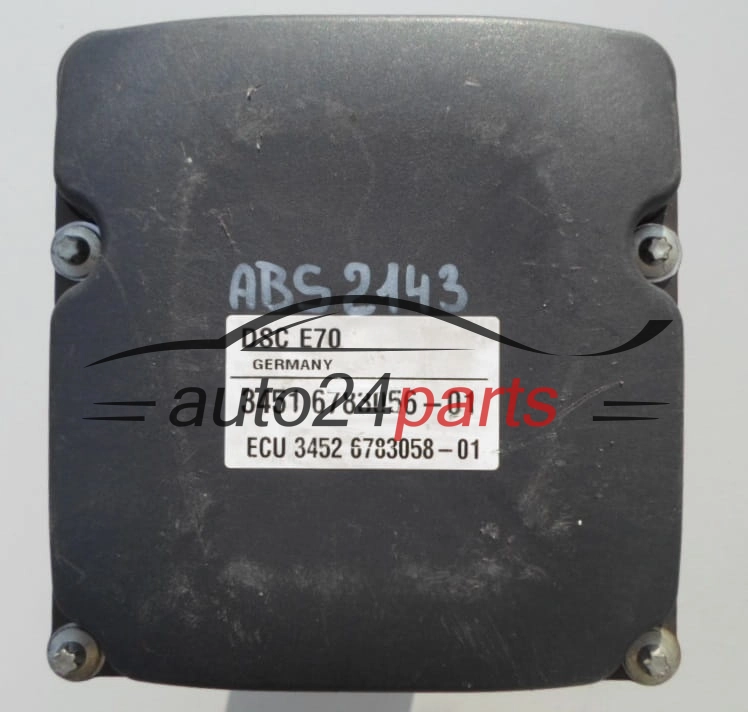
This is a used original ABS pump with a control unit for BMW cars: an aluminium hydraulic block with valves and a pump motor, with the electronics bolted to it. The main number is 3451678305601, and the other numbers from the labels are listed below. The listing does not state the car model or year, so we do not give them here and match the part by its numbers.
Where to find the numbers on an ABS pump
You will find the numbers on the labels, while catalogues list them as a single string:
- 3451 6780126 02 (catalogue format: 3451678012602), BMW number of the ABS pump (hydraulic part),
- 3451 6783056 01 (catalogue format: 3451678305601), BMW number of the ABS pump (hydraulic part),
- 0 265 250 200 (catalogue format: 0265250200), hydraulic block manufacturer's number,
- 0 265 960 300 (catalogue format: 0265960300), control unit number.
The full numbers matter, including their endings. If in doubt, send us a photo of your pump.
What can point to an ABS pump failure
- the brake pedal pulses or feels uneven for no obvious reason,
- the ABS activates for no reason during normal braking,
- brake fluid leaks from the hydraulic block, which requires immediate action,
- on a slippery surface the wheels lock up noticeably sooner than they used to.
It is worth reading the fault codes and checking the sensor wiring before replacement. Fitting and bleeding the brake system are usually carried out by a garage with the right equipment.
Questions and answers
| What is the difference between numbers 3451678305601 and 3451678012602? |
|---|
| The module carries several numbers, because it is identified both by the car brand and by the manufacturer of the block and control unit. When matching the part, compare all the numbers. |
| Which car model does this pump fit? |
| The listing does not state a model or year, so confirm compatibility with the number from the original pump in your car, or send us a photo of it. |
| Are the pump and the control unit sold separately? |
| In this listing they are a single module: a hydraulic block with the pump and valves, with the control unit attached to it. |
| Is this a new part? |
| No. We sell used original modules, each one inspected before sale. You will find the warranty period in the product features table. |
Not sure about the match? Send us a photo of the numbers on your ABS pump and we will check whether this module will fit.

