






For an Astra G or Zafira A, an HSFI 2.1 Virgin ECU programmed with the Car Pass code is enough, or a three-part set. In a Corsa C or Combo with a CAN bus immobiliser, the Plug & Play set has five parts, and the ECU on its own will not start the engine without programming.
ABS pump and control module Audi TRW 5N0614109CF 65285243 54086984G
Vendors's code: 5N0614109CF
Product code: 9081-156CE
Barcode:
Code 39:
ISBN:
€284.55
Price
€284.55
€350.00
Price
€350.00

Ask about the product

ABS pump and control module Audi TRW 5N0614109CF 65285243 54086984G
Administratorem danych osobowych jest Auto24parts. Przetwarzamy je w celu przesłania odpowiedzi na zapytanie. Więcej informacji dotyczących przetwarzania danych osobowych znajduje się w polityce prywatności.
Shipping
from
€30.00
-
shipping
(Poland)
from
€30.00
-
shipping
(Poland)
Price 30 euros applies shipments to 5 kg on worldwide. Above this weight, please contact us by email to check price
Shipping cost for the selected product
The shipping cost applies to this product (in the selected variant - if applicable). It may change after adding other products to the cart.

ABS pump 5N0614109CF with control module - is this your number?
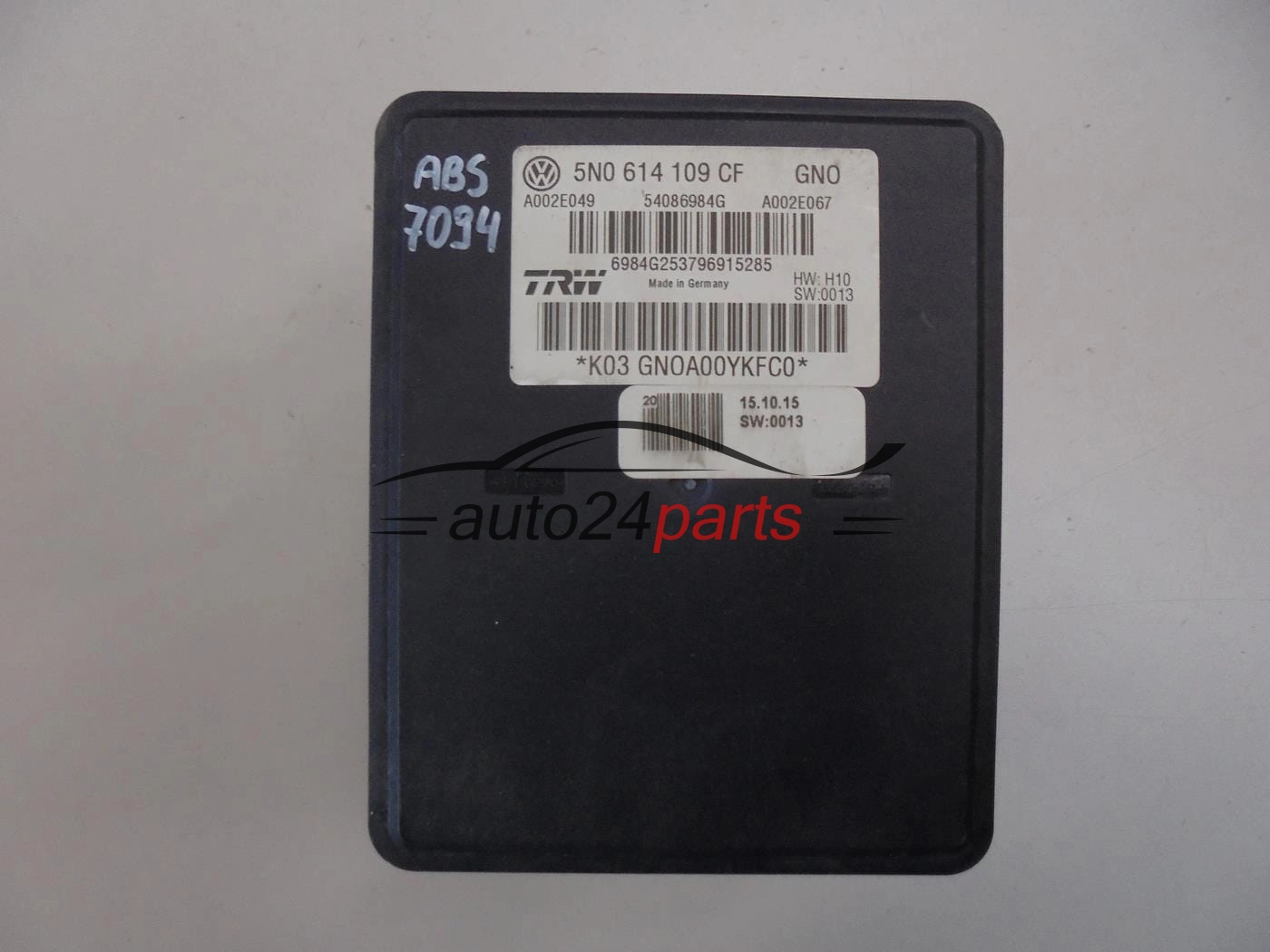
The TRW assembly with VAG number 5N0 614 109 CF and numbers 65285243 and 54086984G is used, in working order and intended for Audi. Compare these markings with your own part.
TRW assembly 5N0614109CF with electronic module - Audi
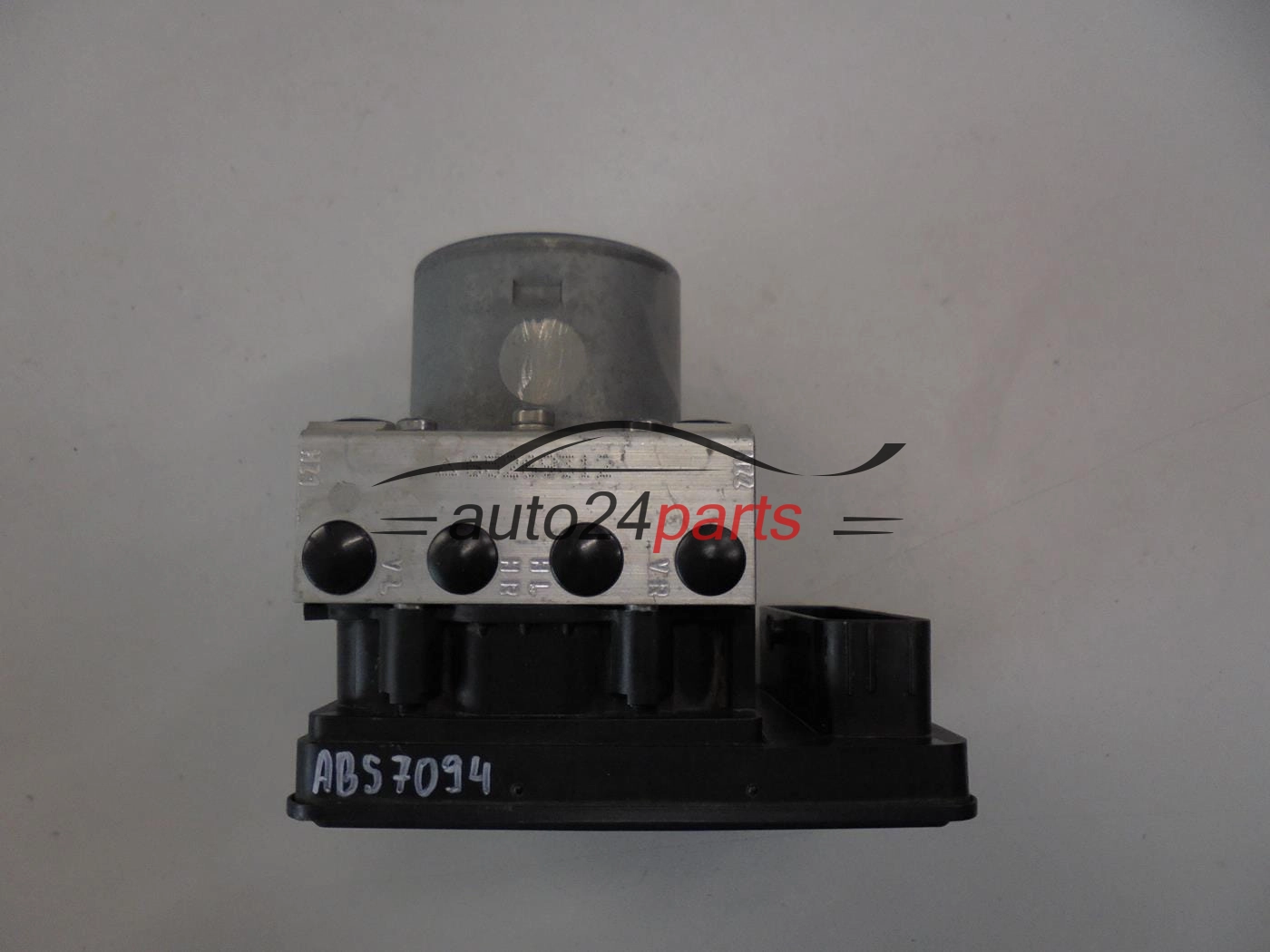
This assembly consists of an aluminium hydraulic block with valves and the pump motor, plus an electronic module bolted to it. The VAG number of the hydraulic unit is 5N0614109CF. The TRW assembly label shows number 54086984G and the markings ‘GNO’ and ‘HW: H10, SW: 0013’. Number 65285243 comes from the product data and is not visible on the labels.
Numbers and markings on this assembly
- 5N0614109CF - VAG number of the ABS pump (hydraulic unit): 5N0 614 109 CF
- 65285243 - number from the product data: 65285243 - not visible on the labels, and its role is not described
- 54086984G - number from the TRW label: 54086984G - its role is not described
The characters stamped in dots on the top face of the block are covered by a watermark in the photos, so the number and markings from the TRW label are what you compare. We do not assign any role to these numbers, so always read them together with the VAG number. The shop has 10 other versions of the pump with the same start of the number, so watch the ending CF.
How can you tell there is a problem with the ABS assembly?
You will usually see:
- an ABS warning light, often together with the brake lamp,
- an internal control module fault in the memory,
- no communication with the ABS module during diagnostics.
Before you decide the assembly is to blame, read the fault codes and check the wheel speed sensors, fuses, wires with the plug, and the battery voltage. After fitting, bleed the brakes; on many VW Group cars the module additionally has to be coded with a diagnostic tool.
Before you order assembly 5N0614109CF
| Which car is this assembly intended for? |
|---|
| Audi. We do not confirm a model - the fit is established by the numbers. |
| What condition is the part in, and what about the warranty? |
| It is a genuine TRW assembly, used and in working order. The warranty period is given in the product features table. |
| Which number is the most important? |
| The VAG pump number 5N0 614 109 CF, including the letters at the end. Numbers 65285243 and 54086984G help to confirm your choice, although their role is not described. |
| What do the TRW numbers on this assembly mean? |
| We do not describe their role - 54086984G is a number from the label, and 65285243 comes from the product data. Do not treat them as Bosch or ATE numbers. |
Send a photo of the label on your part or your VIN, and we will tell you whether this assembly is for you.

