








A used engine control unit will not usually start your car straight away, because its memory holds the immobiliser data of the car it came from. We explain how ECU programming, coding and cloning differ, and which preparation option to choose for your replacement ECU.
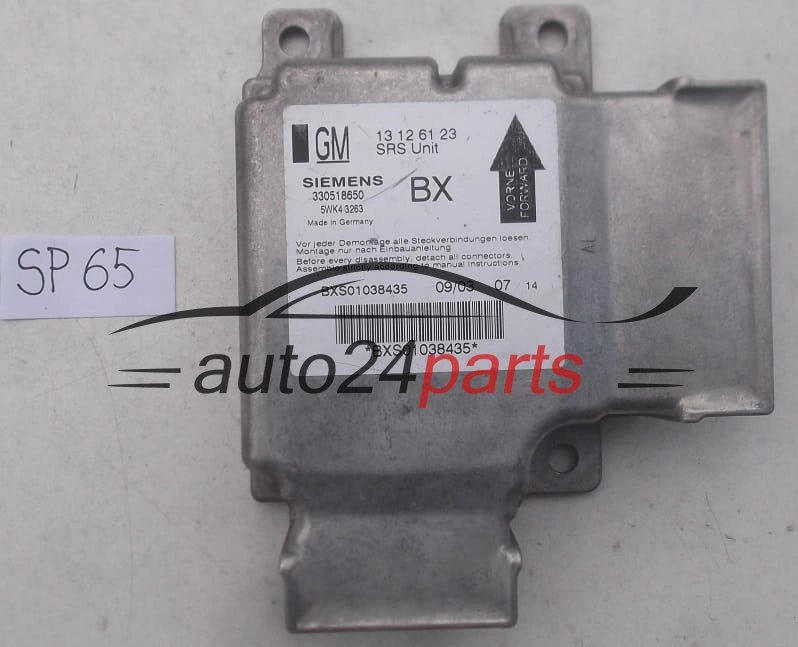
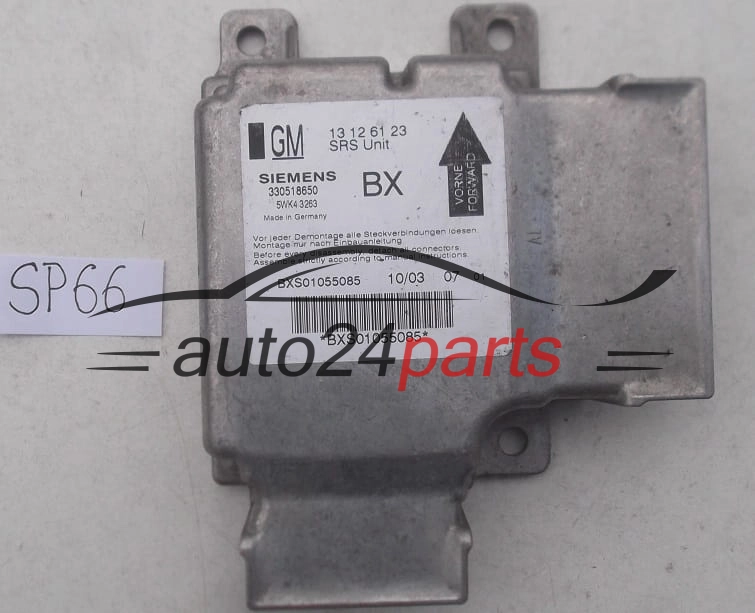
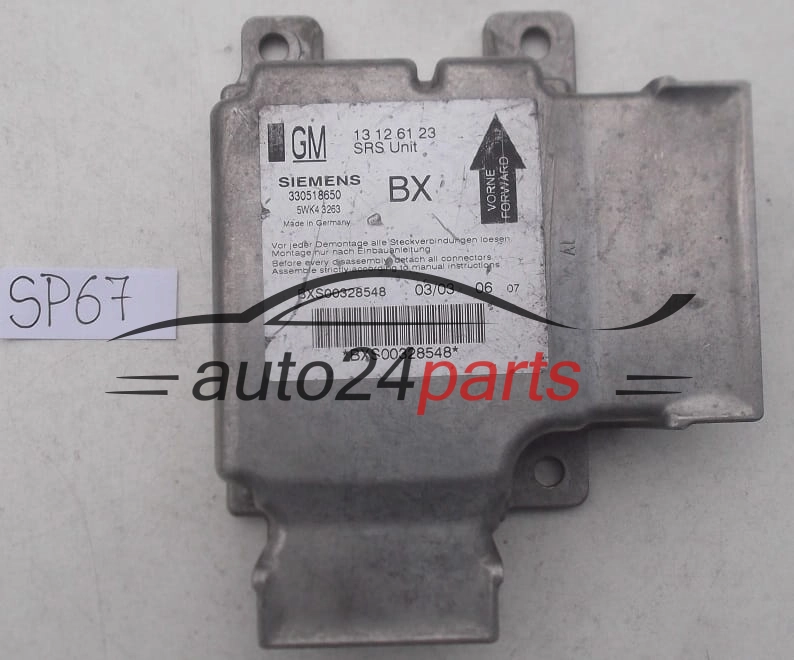
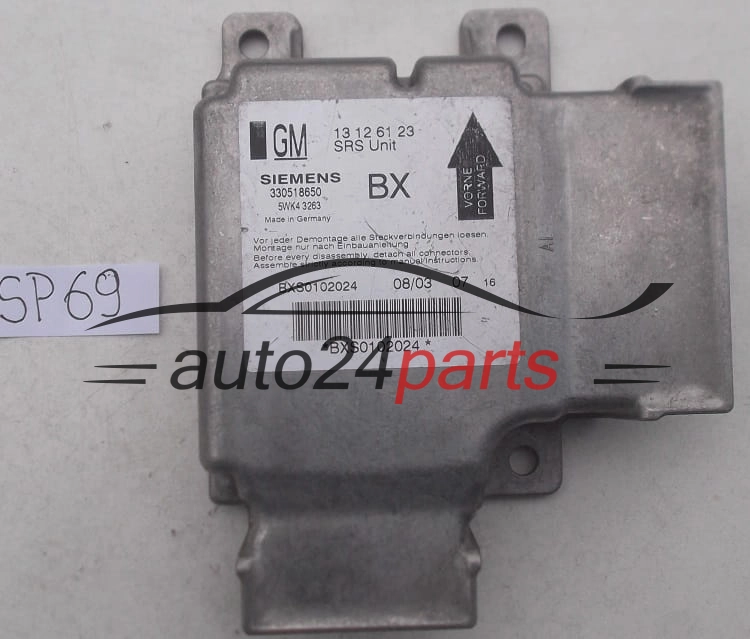
Airbag control module Opel Vectra C Signum 13126123 BX, 13126123
Vendors's code: 5WK43263
Product code: 13126123BX
Barcode:
Code 39:
ISBN:
Ask about the product

Airbag control module Opel Vectra C Signum 13126123 BX, 13126123
Administratorem danych osobowych jest Auto24parts. Przetwarzamy je w celu przesłania odpowiedzi na zapytanie. Więcej informacji dotyczących przetwarzania danych osobowych znajduje się w polityce prywatności.
Shipping
from
£22.75
-
shipping
(Poland)
from
£22.75
-
shipping
(Poland)
Price 30 euros applies shipments to 5 kg on worldwide. Above this weight, please contact us by email to check price
Shipping cost for the selected product
The shipping cost applies to this product (in the selected variant - if applicable). It may change after adding other products to the cart.

Does airbag module 13126123 BX fit your car?
On offer: airbag control unit 13126123 BX for the Opel Vectra C and Opel Signum. This is a used part. Before you order, check this number against the one on your module.
Airbag control module Opel Vectra C Signum 13126123 BX, 13126123
We sell airbag module 13126123 BX made by Siemens, removed from a used vehicle. Applications: Opel Vectra C and Opel Signum. This is a used part. You can collect the module in person or order it with shipping. This offer comes with a 6-month warranty.
Label data and numbers to compare
- 13126123 BX - OEM number
- 13126123 - OEM number
- 5WK43263 - module manufacturer number
- manufacturer: Siemens
Application
- Opel Vectra C
- Opel Signum
If your module has a different number or letter code, write to us before you buy.
How an airbag control module works
It is the central unit of the passive safety system. It decides whether and which airbags and pretensioners should deploy, and it records data about the event afterwards. The module has its own energy reserve, so it can still fire the airbags if the battery supply is cut during a crash.
Signs that the module should be checked
These symptoms can point to a module fault:
- an internal module fault is stored in memory,
- the module recorded crash data after the airbags deployed,
- the airbag light comes on intermittently or flashes.
Fitting and start-up
In many cars the module has to be coded or adapted to the vehicle with a diagnostic tool after replacement, so leave this to a workshop. Fit the module according to the driving-direction arrow on the housing and tighten it firmly, as a loose mounting disturbs acceleration measurement.
Questions and answers
| Does the module need programming? |
|---|
| On some models it has to be coded or adapted with a diagnostic tool after replacement. If you are not sure about your car, ask a workshop or write to us. |
| Who should fit the module? |
| The airbag system contains pyrotechnic charges, so fitting is best left to a workshop. |
| Can a module be reused after an accident? |
| After the airbags deploy, the module usually stores crash data and has to be replaced or have that data cleared by a specialist workshop. |
Order online or write to contact@auto24parts.com and we will answer your compatibility questions.

