





A faulty transmission control module (TCM) most often causes limp mode with the gearbox stuck in one gear, harsh jolts when you select D or R, erratic gear changes, flashing PRND letters and a gearbox or engine warning light. However, the same symptoms are often caused by a low gearbox oil level, a weak battery, a poor earth or a faulty sensor. To test a transmission control module, start by checking the battery and reading the fault codes with a diagnostic tool that can talk to the gearbox control unit, then check the power supply, the connector, the oil and the live data. Below we explain the symptoms, the diagnostic steps and what the most common fault codes mean.
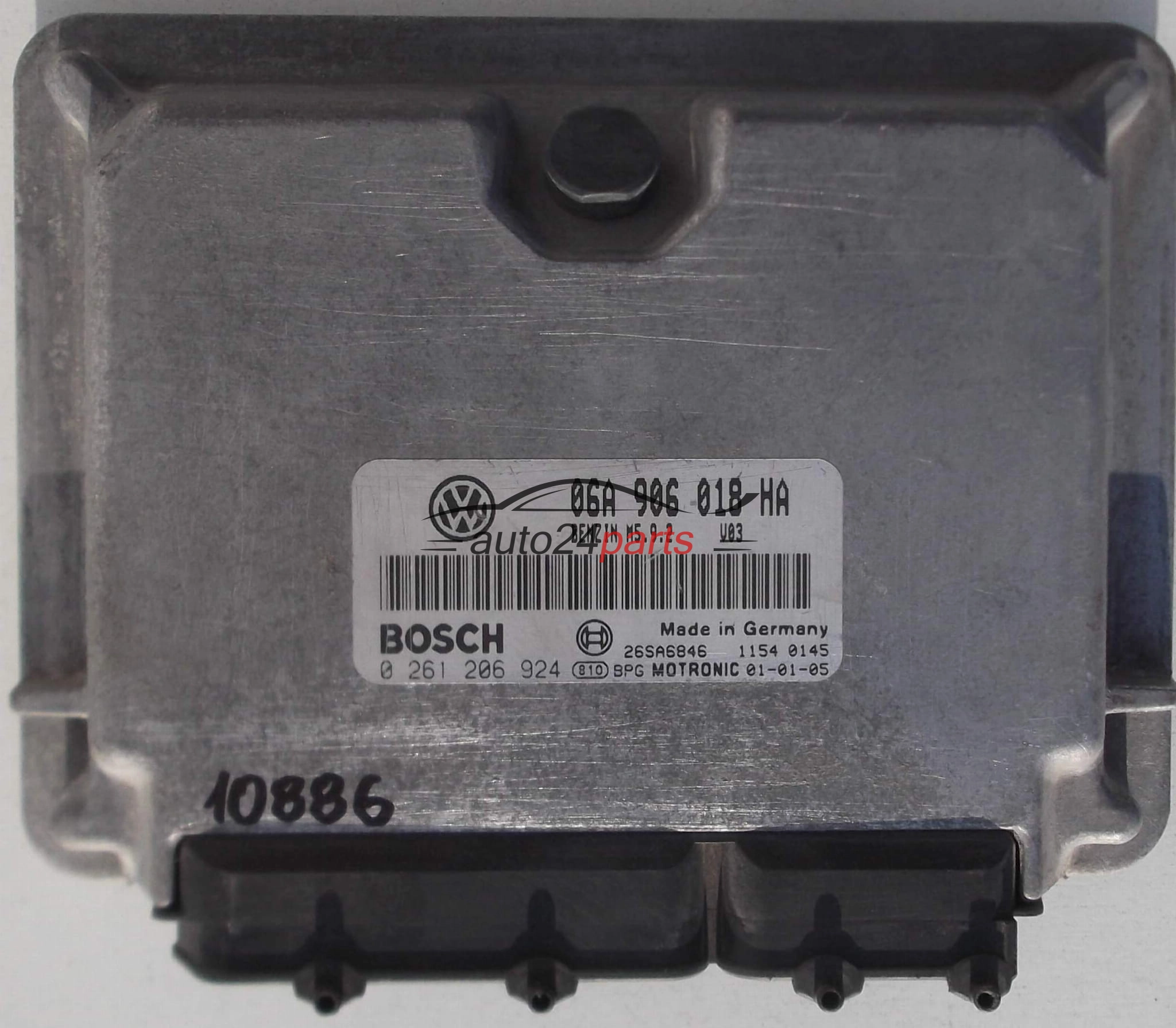
Engine Control Unit Skoda Octavia 2.0 Bosch 06A906018HA 0281206924
Vendors's code: 0281206924
Product code: 0281206924
Barcode:
Code 39:
ISBN:
£92.63
Price
£92.63
£113.94
Price
£113.94

Ask about the product

Engine Control Unit Skoda Octavia 2.0 Bosch 06A906018HA 0281206924
Administratorem danych osobowych jest Auto24parts. Przetwarzamy je w celu przesłania odpowiedzi na zapytanie. Więcej informacji dotyczących przetwarzania danych osobowych znajduje się w polityce prywatności.
Shipping
from
£22.79
-
shipping
(Poland)
from
£22.79
-
shipping
(Poland)
Price 30 euros applies shipments to 5 kg on worldwide. Above this weight, please contact us by email to check price
Shipping cost for the selected product
The shipping cost applies to this product (in the selected variant - if applicable). It may change after adding other products to the cart.

Will ECU 06A906018HA fit your Skoda Octavia 2.0?
It will if the label on your current unit shows the same number 06A906018HA and the Bosch number 0281206924 (printed on the sticker as 0 281 206 924). The ECU is used and fully working, and is available locked or unlocked.
Engine Control Unit Skoda Octavia 2.0 Bosch 06A906018HA 0281206924
A Skoda Octavia with the 2.0 engine needs a control unit that reads the sensor signals and uses them to set fuelling and the engine's response under load. This unit was made by Bosch and carries the VW/Skoda catalogue number 06A906018HA. It has been removed from a vehicle, is fully working and in good condition.
Numbers on the label
- 06A906018HA – VW/Skoda part number; the closing letters HA identify the specific version of the unit
- 0281206924 – Bosch number, shown on the sticker as 0 281 206 924
Compare both numbers with the sticker on the ECU casing in your Octavia. The letters at the end of the VW number denote the software or hardware version, so a unit with a different suffix may not work with your car.
Signs that the ECU may be faulty
- the engine cranks but will not start,
- the diagnostic tool cannot connect to the unit,
- the engine warning light is on and internal ECU faults are stored,
- the fault appeared after a voltage spike, a jump start or water ingress.
Start by checking the battery, fuses and earth connections – a weak power supply can produce exactly the same symptoms.
Locked or unlocked – which should you choose?
The locked version still holds the data and immobiliser of the car it was removed from. It is intended for garages that will handle unlocking, programming and adaptation themselves. We prepare the unlocked version before dispatch, which usually takes 1–2 working days.
The methods – PIN / CAR PASS, Virgin, IMMO OFF, auto programming or cloning – depend on the part number, software and immobiliser, so not every one will work with this unit. Please ask us before you buy. Full details are on the ECU preparation options page.
Questions and answers
| Can I order ECU 06A906018HA if I only know the car model? |
|---|
| We do not recommend it. Various ECUs were fitted to the Octavia 2.0, so always check the number on your own unit's label. |
| What does the number 0281206924 mean? |
| It is the number assigned by Bosch. Together with 06A906018HA it identifies this unit unambiguously. |
| What condition is the ECU in and what warranty does it have? |
| The ECU is used, fully working and in good condition. You will find the warranty period in the product specification table. |
Not sure about the numbers? Send a photo of the label to contact@auto24parts.com and we will tell you whether this ECU is the right one.
