





For an Astra G or Zafira A, an HSFI 2.1 Virgin ECU programmed with the Car Pass code is enough, or a three-part set. In a Corsa C or Combo with a CAN bus immobiliser, the Plug & Play set has five parts, and the ECU on its own will not start the engine without programming.
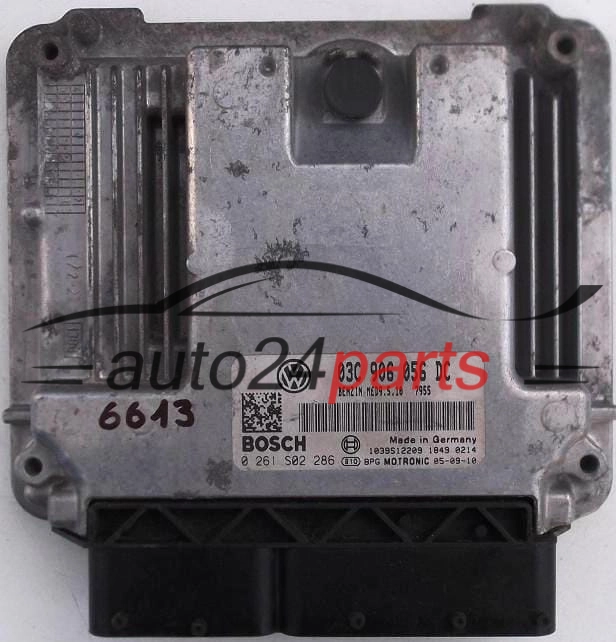
Engine Control Unit Volkswagen Passat Bosch 03C906056DC 0261S02286
Vendors's code: 0261S02286
Product code: 0261S02286
Barcode:
Code 39:
ISBN:
€203.25
Price
€203.25
€250.00
Price
€250.00

Ask about the product

Engine Control Unit Volkswagen Passat Bosch 03C906056DC 0261S02286
Administratorem danych osobowych jest Auto24parts. Przetwarzamy je w celu przesłania odpowiedzi na zapytanie. Więcej informacji dotyczących przetwarzania danych osobowych znajduje się w polityce prywatności.
Shipping
from
€30.00
-
shipping
(Poland)
from
€30.00
-
shipping
(Poland)
Price 30 euros applies shipments to 5 kg on worldwide. Above this weight, please contact us by email to check price
Shipping cost for the selected product
The shipping cost applies to this product (in the selected variant - if applicable). It may change after adding other products to the cart.

What does the number 1039S12209 on the 03C906056DC ECU mean?
It is the Bosch software number printed on the label of the 03C906056DC engine control unit (Bosch 0 261 S02 286). This used, working module comes from a petrol Volkswagen Passat.
Engine Control Unit Volkswagen Passat Bosch 03C906056DC 0261S02286
The label on this ECU carries three numbers, and each has a different role. 03C906056DC is the VW part number, 0261S02286 is the Bosch hardware number and 1039S12209 is the Bosch software number. The module controls the petrol engine in a Volkswagen Passat; a Bosch number starting with 0 261 confirms that it is a petrol ECU.
Numbers on the label
- 03C906056DC – VW part number
- 0261S02286 – Bosch number, shown on the sticker as 0 261 S02 286
- 1039S12209 – Bosch software number
The letters DC at the end of the VW number indicate the version. When matching, it is worth comparing the software number as well – an identical 1039S… makes later adaptation easier.
Symptoms of a faulty ECU
- limp mode and loss of power with no sensor fault,
- the engine will not start even though the fuel supply is working,
- internal module faults stored in memory,
- no communication during diagnostics.
Before you write the module off, check the battery voltage, earths and wiring loom. A weak battery can cause a series of random faults that look like an ECU failure.
Locked and unlocked versions
You can buy the 03C906056DC ECU locked – with the data and immobiliser of the donor car, for a workshop that will unlock, program and adapt it itself – or unlocked. We prepare the latter before the parcel is sent, usually within 1–2 working days.
PIN / CAR PASS, Virgin, IMMO OFF, auto programming or a clone are not always feasible – it depends on the number, software and immobiliser. Please ask before buying. Description: ECU preparation options.
Questions and answers
| What is the difference between 0261S02286 and 1039S12209? |
|---|
| The first is the Bosch hardware number, the second is the Bosch software number of the same ECU. |
| Which Passat engine is this ECU for? |
| Our data indicates a petrol engine, with no engine size given. Confirm compatibility using the numbers on the label. |
| What condition is the ECU in? |
| It is a used part, working and in good condition. You will find the warranty period in the product features table. |
If you have any questions, email contact@auto24parts.com and include all the numbers from the label.
