


A faulty transmission control module (TCM) most often causes limp mode with the gearbox stuck in one gear, harsh jolts when you select D or R, erratic gear changes, flashing PRND letters and a gearbox or engine warning light. However, the same symptoms are often caused by a low gearbox oil level, a weak battery, a poor earth or a faulty sensor. To test a transmission control module, start by checking the battery and reading the fault codes with a diagnostic tool that can talk to the gearbox control unit, then check the power supply, the connector, the oil and the live data. Below we explain the symptoms, the diagnostic steps and what the most common fault codes mean.
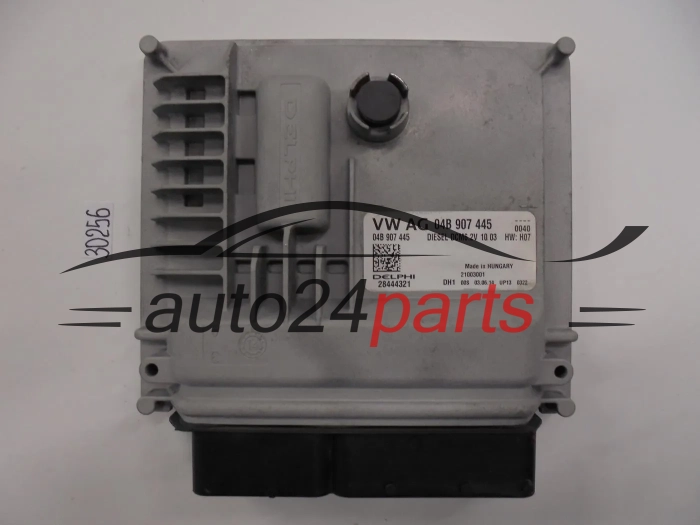
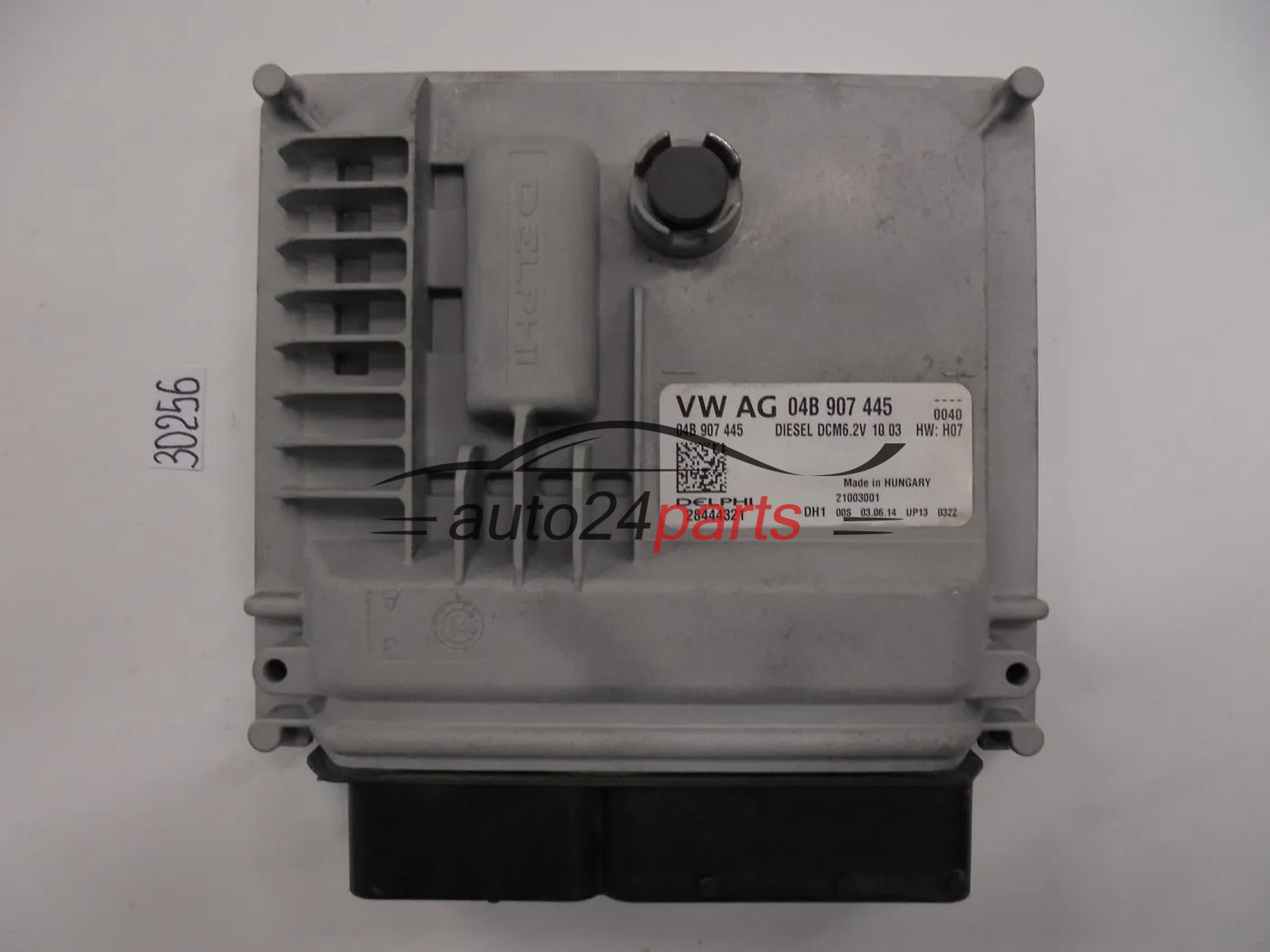
Engine Control Unit Volkswagen, Skoda 1.4 TDI Delphi DCM6.2V 04B907445 28444321
Vendors's code: 28444321
Product code: 28444321
Barcode:
Code 39:
ISBN:
650,41 zł
Price
650,41 zł
800,00 zł
Price
800,00 zł

Select a product option:
Individual variants may differ in price
product option
Important: Depending on the ECU type and vehicle model, not all of the options listed below may be available.
To select the correct option for your vehicle and ECU, please contact us before purchasing:
contact@auto24parts.com
1. Locked
This option is intended for professional workshops with the required specialist equipment and technical knowledge.
The ECU has been removed from a vehicle intended for recycling and still contains the immobilizer data and other information from the previous vehicle. Before it can be used in another car, it must be unlocked and then programmed using specialist automotive diagnostic equipment.
2. Unlocked
Several preparation methods may be available. The possible options depend on the ECU type, vehicle model and immobilizer system. Please contact us before purchasing, as some preparation methods are not available for every ECU.
Our electronics specialists can prepare the ECU in one of the following ways:
a) ECU with PIN code (Car Pass)
The PIN code is supplied, but programming with a suitable diagnostic tool is still required. After installing the ECU, it must be reset using the supplied PIN code and then programmed to the vehicle’s immobilizer system.
b) VIRGIN ECU
The data from the previous vehicle is removed and the ECU is restored to a clean, factory-like state. After installation, it must be programmed to the vehicle using a compatible specialist diagnostic tool. Unless another preparation method is specified in the product description, this is the standard unlocking option for most of our ECUs.
c) Plug & Play – IMMO OFF
The immobilizer function is disabled in the ECU. After installation, the engine can start without additional immobilizer programming. Please note that the vehicle will no longer have an active immobilizer function, and an immobilizer warning light or fault code may remain, depending on the vehicle model.
d) Plug & Play – Automatic Programming
After installation, the ECU automatically learns and saves the required vehicle data. No additional programming is normally required.
e) Plug & Play – 1:1 Clone
The data from your original ECU is copied to another fully functional ECU. The cloned unit is then ready for installation without additional programming.
You must send us your original ECU so that we can transfer its data to the replacement unit.
The original ECU must have working communication with the vehicle, a diagnostic tool or our programming equipment. If the required data cannot be read, a complete 1:1 clone may not be possible.
3. Complete Plug & Play Set
A complete matched set containing the ECU, immobilizer components and all other parts required to start the vehicle without additional programming. All components supplied in the set must be installed in the vehicle.
Important:
Dispatch time depends on the selected option. If an unlocked or specially prepared version is ordered, the preparation service usually requires an additional 1–2 business days.
Ask about the product
Engine Control Unit Volkswagen, Skoda 1.4 TDI Delphi DCM6.2V 04B907445 28444321
Administratorem danych osobowych jest Auto24parts. Przetwarzamy je w celu przesłania odpowiedzi na zapytanie. Więcej informacji dotyczących przetwarzania danych osobowych znajduje się w polityce prywatności.
Shipping
from
120,00 zł
-
shipping
(Poland)
from
120,00 zł
-
shipping
(Poland)
Price 30 euros applies shipments to 5 kg on worldwide. Above this weight, please contact us by email to check price
Shipping cost for the selected product
The shipping cost applies to this product (in the selected variant - if applicable). It may change after adding other products to the cart.

How does ECU 04B907445 with Delphi number 28444321 differ from other 04B907445 units?
VW number 04B907445 is carried by several Delphi DCM6.2V ECUs for the 1.4 TDI, and they are distinguished by the manufacturer number. This unit has Delphi number 28444321, is used, in working order and sold in the locked version only.
Engine Control Unit Volkswagen, Skoda 1.4 TDI Delphi DCM6.2V 04B907445 28444321
With ECU 04B907445, the Volkswagen number alone is not enough to determine compatibility – the Delphi number also matters, in this case 28444321. The module belongs to the Delphi DCM6.2V family, designed for diesel engines, and comes from a Volkswagen or Skoda 1.4 TDI. It controls fuel injection, turbo boost and the running of the engine based on signals from the sensors.
Numbers on the casing
- 04B907445 – Volkswagen part number
- 28444321 – Delphi manufacturer number – identifies this particular unit
- DCM6.2V – Delphi ECU family
VW number 04B907445 has no version letter at the end, so also check the Delphi number when comparing. The safest choice is a module with the same pair of numbers as in your vehicle.
When the 1.4 TDI ECU may be faulty
- the engine will not start, even though the fuel supply and starter motor are fine,
- no connection to the engine module in the tester,
- persistent limp mode and low power,
- internal ECU faults after a voltage spike.
Before deciding to replace it, rule out a fault in the power supply, fuses and wiring loom.
Locked version only
We sell this ECU locked only. This means that it has the data and immobiliser of the vehicle it was removed from stored in it, and the unlocking, programming and matching to your vehicle are carried out by a workshop on its own.
The offer is therefore aimed mainly at workshops with the right equipment. Information on how the various options differ can be found on the ECU preparation options page.
Questions and answers
| Can I buy this module in an unlocked version? |
|---|
| No, we offer this unit in the locked version only. |
| Will a module with a different Delphi number work in the same way? |
| Not necessarily. The Delphi number identifies the module version, so compare it with yours. |
| What condition is the ECU in? |
| Used, in working order and in good condition. You will find the warranty period in the product features table. |
Send the 04B907445 and Delphi numbers from your label to contact@auto24parts.com – we will check compatibility.