






For an Astra G or Zafira A, an HSFI 2.1 Virgin ECU programmed with the Car Pass code is enough, or a three-part set. In a Corsa C or Combo with a CAN bus immobiliser, the Plug & Play set has five parts, and the ECU on its own will not start the engine without programming.
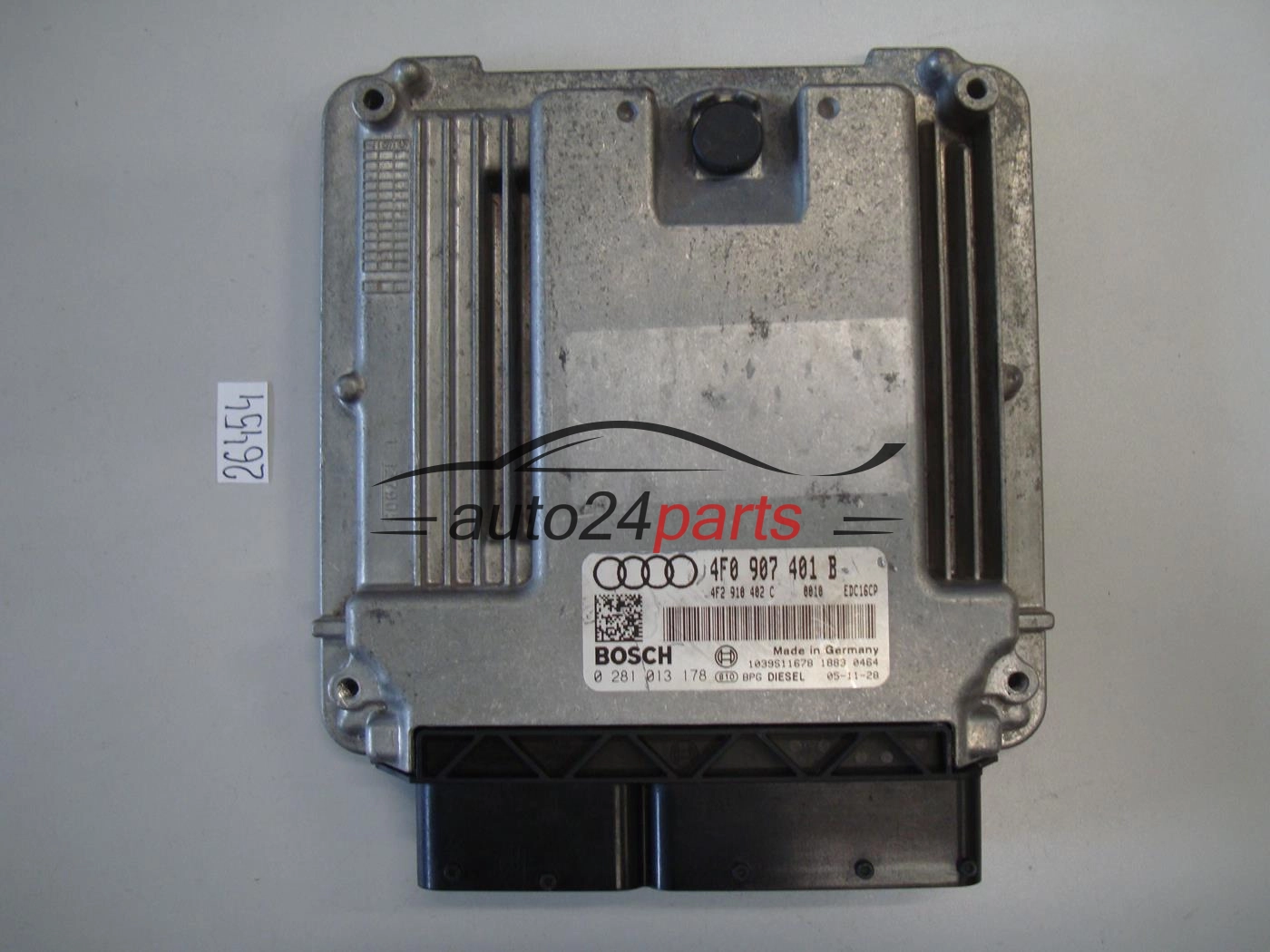
Engine control unit Audi Bosch 4F0907401B 0281013178
Vendors's code: 0281013178
Product code: 4F0907401B
Barcode:
Code 39:
ISBN:
€304.88
Price
€304.88
€375.00
Price
€375.00

Select a product option:
Individual variants may differ in price
Ask about the product

Engine control unit Audi Bosch 4F0907401B 0281013178
Administratorem danych osobowych jest Auto24parts. Przetwarzamy je w celu przesłania odpowiedzi na zapytanie. Więcej informacji dotyczących przetwarzania danych osobowych znajduje się w polityce prywatności.
Shipping
from
€30.00
-
shipping
(Poland)
from
€30.00
-
shipping
(Poland)
Price 30 euros applies shipments to 5 kg on worldwide. Above this weight, please contact us by email to check price
Shipping cost for the selected product
The shipping cost applies to this product (in the selected variant - if applicable). It may change after adding other products to the cart.

What does the number 4F0907401B on an engine control unit mean?
Used, working Bosch engine control unit 0281013178 (VAG number 4F0907401B) for diesel engines, for Audi. Match it by the numbers on the housing – you choose the locked or unlocked version when ordering.
Engine control unit 0281013178 – Audi
An engine control unit for diesel engines collects sensor data and uses it to run the powertrain. This one, Bosch 0281013178, comes from an Audi and is used, working and in good condition.
Part numbers to compare
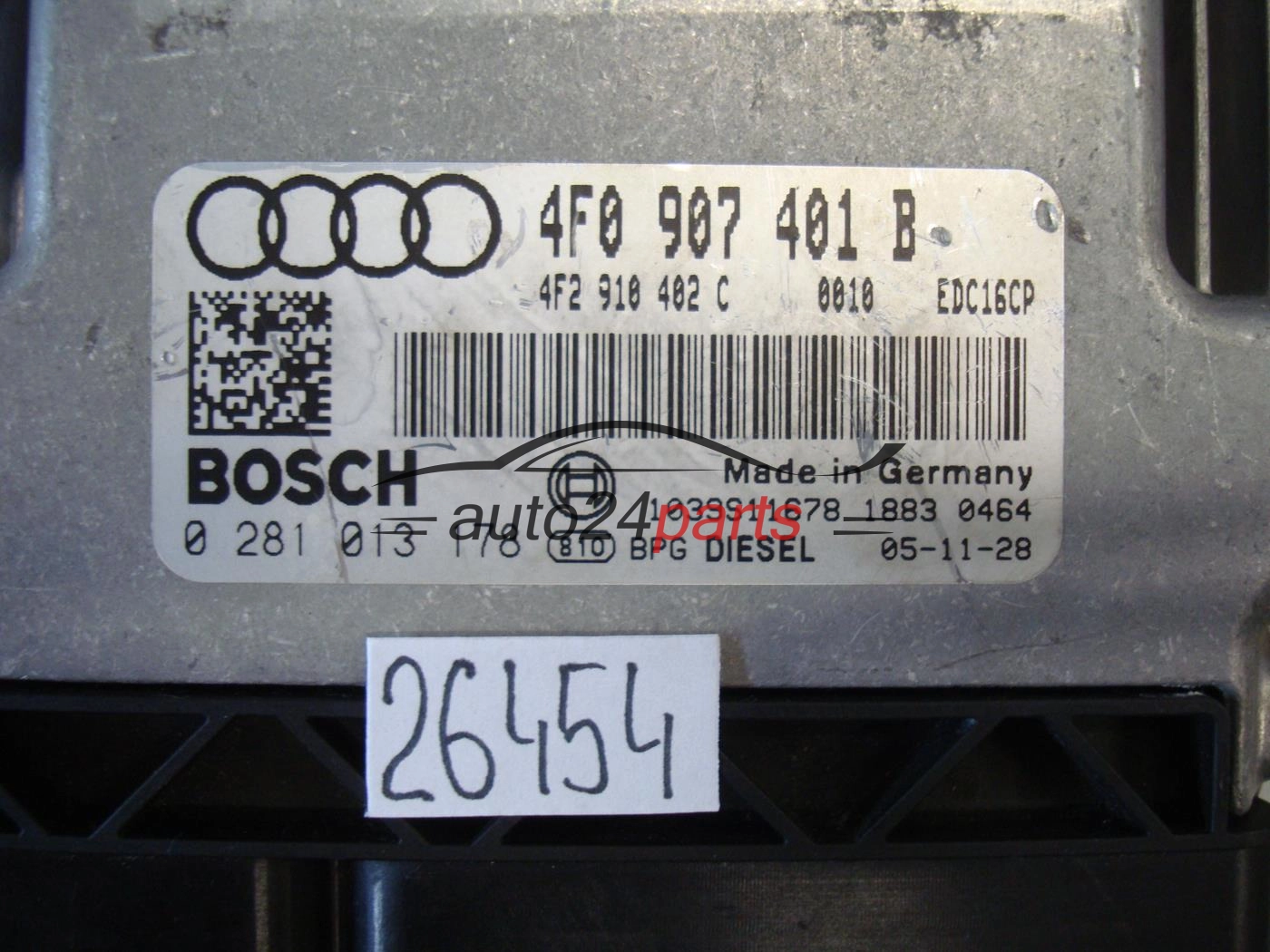
- 0 281 013 178 / 0281013178 – Manufacturer part number (Bosch)
- 4F0 907 401 B / 4F0907401B – VAG group part number
You will find the numbers on a sticker or print on the control unit housing. 0281013178 is the manufacturer number (Bosch), 4F0907401B the VAG number; either one is enough for comparison.
When does an engine control unit start causing trouble?
Typical symptoms are hard or no starting, an engine warning light, limp mode, no communication with diagnostics and injection system errors. Before replacing the unit, check the power supply, grounds, fuses and wiring – the control unit is not always the cause.
Locked or unlocked version?
A locked unit still carries the data and immobiliser of the previous car – it suits workshops that unlock, program and match the part themselves. We prepare an unlocked unit before dispatch (about 1–2 working days). Not every unlocking method is available for every unit – it depends on the number, software and immobiliser, so ask before buying if in doubt. Details: engine ECU preparation options.
Questions about this control unit
| Is 0281013178 the same as 4F0907401B? | They are two numbers of the same part: 0281013178 was assigned by the manufacturer (Bosch), while 4F0907401B is the VAG group number. The housing usually shows both, and one of them is enough for comparison. |
| Can I confirm compatibility before buying? | Yes. Write to contact@auto24parts.com with the number from your control unit’s housing or your VIN – we will check whether 0281013178 / 4F0907401B is the right one. |
| Is this control unit new? | No, it is a used part removed from a vehicle, working and in good condition. |
Questions, or want to confirm the fit? Write to contact@auto24parts.com. See also: engine control units for Audi and all engine control units.

