




A used engine control unit will not usually start your car straight away, because its memory holds the immobiliser data of the car it came from. We explain how ECU programming, coding and cloning differ, and which preparation option to choose for your replacement ECU.
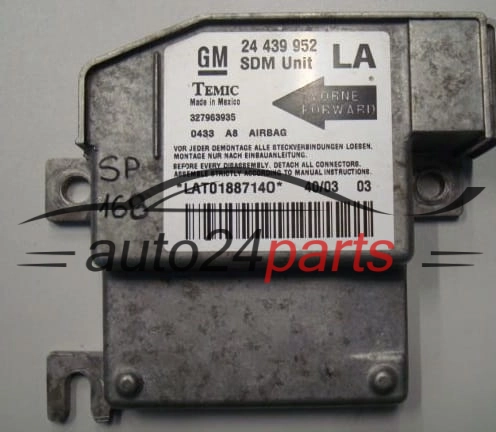
Airbag control module Opel Corsa C 24439952 LA, 24439952, 327963935
Vendors's code: 327963935
Product code: 24439952LA
Barcode:
Code 39:
ISBN:
Ask about the product

Airbag control module Opel Corsa C 24439952 LA, 24439952, 327963935
Administratorem danych osobowych jest Auto24parts. Przetwarzamy je w celu przesłania odpowiedzi na zapytanie. Więcej informacji dotyczących przetwarzania danych osobowych znajduje się w polityce prywatności.
Shipping
from
€30.00
-
shipping
(Poland)
from
€30.00
-
shipping
(Poland)
Price 30 euros applies shipments to 5 kg on worldwide. Above this weight, please contact us by email to check price
Shipping cost for the selected product
The shipping cost applies to this product (in the selected variant - if applicable). It may change after adding other products to the cart.

Looking for airbag ECU 24439952 LA for the Opel Corsa C?
This is an airbag control module made by Temic with number 24439952 LA, used in the Opel Corsa C. This is a used part. Before buying, compare the number with the label on your own module.
Airbag control module Opel Corsa C 24439952 LA, 24439952, 327963935
This listing covers one specific module: airbag control module 24439952 LA made by Temic, application: Opel Corsa C. This is a used part. You can collect the module in person or order it with shipping. This offer comes with a 6-month warranty.
Label data and numbers to compare
- 24439952 LA - OEM number
- 24439952 - OEM number
- 327963935 - module manufacturer number
- manufacturer: Temic
Application
- Opel Corsa C
The model list comes from the listing data; what decides compatibility is a matching number.
What this module does
It is the central unit of the passive safety system. It decides whether and which airbags and pretensioners should deploy, and it records data about the event afterwards. The module is usually mounted in the middle of the car, for example under the centre console or on the floor tunnel, where it can best measure body deceleration in an impact.
Typical fault symptoms
Replacement may be needed when:
- an internal module fault is stored in memory,
- the airbag light comes on intermittently or flashes,
- after accident repairs the module fails the system self-test.
Fitting and start-up
Also inspect the plugs and wiring leading to the module, because a damaged harness causes symptoms similar to a module fault. Never test airbag circuits with an ordinary ohmmeter or a test lamp, as this can trigger a deployment.
FAQ before you buy
| How do I check that the module fits? |
|---|
| Compare number 24439952 LA with the label on your module housing, then check the car model and year. |
| What condition is the part in? |
| This is a used part. The housing and label are shown in the photos. |
| How can I receive my order? |
| You can collect the module in person or order it with shipping. |
Not sure about the number? Send a photo of the label to contact@auto24parts.com and we will help you choose.
