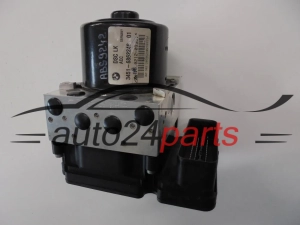
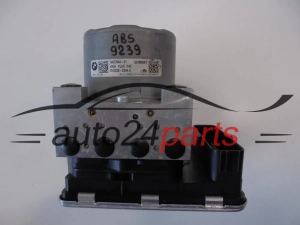
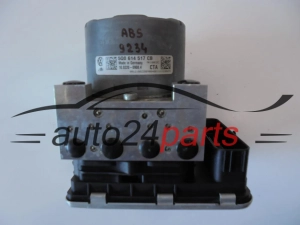
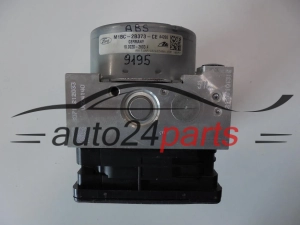
Heavy rain, driving through a deep puddle, or simply parking your car in the autumn under a tree shedding leaves. You turn the key, shift into "Drive," and instead of a smooth start, you feel a massive jerk. The PRND gear indicators disappear from the dashboard, and the car barely moves, stuck in one gear. The mechanic's diagnosis is often brutal and keeps you awake at night: a flooded Automatic Transmission Control Module (TCM).
This is one of the most stressful electronic failures in modern vehicles. Faced with a breakdown, many drivers frantically search for companies that will "dry, test, and rebuild" the damaged module. Unfortunately, when it comes to water-damaged electronics, such rescue attempts usually lead to frustration, wasted time, and throwing money down the drain.
We explain why this happens and what the only truly reasonable way out of this situation is.
What is a Transmission Control Module (TCM) and How Does it Get Flooded?
The TCM (Transmission Control Module) is the "brain" of your automatic transmission. It's an advanced computer that analyzes dozens of parameters in fractions of a second—from wheel speed and engine load to how deep you press the gas pedal. Based on this data, it controls the solenoids, deciding on the perfect, smooth moment to shift gears.
Although manufacturers enclose these modules in hermetic casings, their location in the car can be very unfortunate. How does water get inside?
-
Clogged cowl panel drains: This is an absolute plague in many brands (e.g., Audi, BMW, VW). Leaves and dirt gather there, clogging the drainage channels. Instead of flowing under the car, rainwater creates a "pool" where the TCM eventually ends up.
-
Unfortunate engine washing: Using a pressure washer from too close forces water straight through the rubber seals of the connectors, directly onto the delicate pins of the motherboard.
-
Lack of under-engine shields: Driving in deep water exposes the electrical harnesses and connectors on the gearbox to direct contact with a wave of water, which over time penetrates inside the module.
Symptoms of a Flooded TCM – How Does the Car Communicate the Fault?
When water connects with the electrical pathways of a running computer, the effects are immediate. Watch out for the following symptoms:
-
Entering Limp Mode: The transmission locks into one safe gear (usually 3rd or 4th) to allow you to pull off the road without destroying the transmission mechanics.
-
Massive jerking: Every shift from P (Park) to R (Reverse) or D (Drive) ends with a strong, unpleasant clunk in the drivetrain.
-
No communication with diagnostics: The mechanic connects a computer (OBD2), but the tester returns the popular error U0101 (Lost Communication with TCM). This means the module has completely "died" and is sending no signals to the CAN network.
-
Disappearing dashboard indicators: The display stops highlighting the currently selected gear (there is no bar under the PRND letters).
Sending it for Testing and Rebuilding? Why This is the Worst Possible Idea
When we find out that a control module costs thousands of dollars at an authorized dealership, the first thought is to send the flooded module to an electronics technician for "inspection and resoldering." From a technical point of view, this is a huge mistake. Why do we strongly advise against attempting to repair water-damaged transmission electronics?
-
Electrolysis is a death sentence for the motherboard: Dirty water is an excellent conductor. When it hits a live integrated circuit, electrolysis occurs instantly. Microscopic copper traces and multi-layer solders simply disappear or turn into green oxide. This process cannot be reversed with a brush and isopropyl alcohol.
-
Costs with no guarantee of success: Electronics companies charge high fees just for "opening and examining" the module under a microscope. It very often turns out that the fault is unrepairable (e.g., a burnt main processor), and you still have to pay the diagnostic bill, leaving you with a broken car.
-
Irreversible loss of the hermetic seal: To repair anything, the technician must invasively cut open the module's casing. Resealing it later with silicone will never match the factory seal. In fluctuating under-hood conditions, moisture will condense inside after just a few weeks, and the car will break down again.
-
Weeks without a car: Shipping, waiting in line for an appraisal, repair attempts, and return shipping often take a couple of weeks, during which your car blocks a bay in the mechanic's shop.
The Only Reasonable Solution: An Original, Used Transmission Control Module
Don't waste your nerves, time, and money trying to resuscitate equipment whose structure has been irreversibly damaged by water. The fastest, safest, and most cost-effective repair method is to buy a working, used TCM from a dismantled vehicle.
Why is this the optimal choice?
-
Factory quality and sealing: You are buying an original module, exactly the same as the one that rolled off your car manufacturer's assembly line. Its casing has never been cut open, guaranteeing full hermetic sealing and vibration resistance.
-
Instant repair: You order a module with the correct part numbers, and the package usually arrives within 24-48 hours.
-
Hassle-free setup: In many older cars, simply plugging in a new module with identical numbers is enough (Plug & Play). In newer models, you will only need to flash the software (so-called cloning, which can easily be read from your old module or downloaded from servers) and perform an adaptation.
-
A fraction of the price of a new one: A working used original usually costs anywhere from ten to twenty-something percent of the price of a new component at the dealership. It's a relief for your wallet while maintaining uncompromising safety.
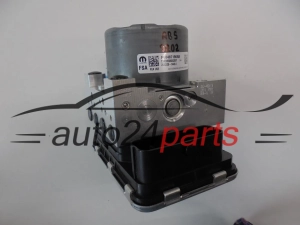
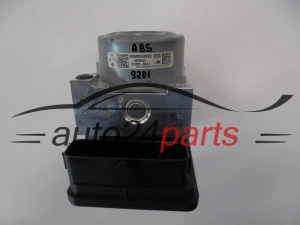
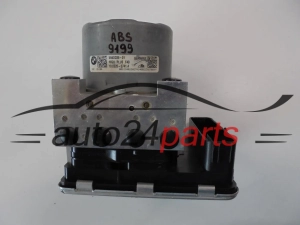
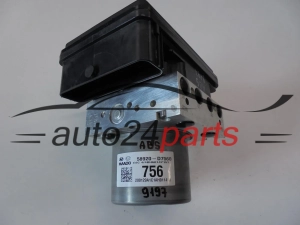
Remember: always select the correct transmission control module based on the serial numbers from the damaged part. You will find these numbers on the casing (usually, these are the car manufacturer's numbers, e.g., VAG group, BMW, Mercedes, and the electronics manufacturer's numbers, e.g., Bosch, Continental, Temic).
Don't risk further breakdowns due to makeshift repairs of a water-damaged integrated circuit. Restore your car's smooth shifting by reaching for tested, reliable components.
You will find a wide selection of original and tested modules for almost every car brand in a professional store: Buy an original automatic transmission control module – check the Auto24Parts offer.
FAQ – Frequently Asked Questions: Flooded Automatic Transmission Control Module (TCM)
1. Can a flooded transmission control module work again after thorough drying? Unfortunately, the chances of this are almost zero. Water (especially rainwater with impurities) is an excellent conductor of electricity. When it gets into a working integrated circuit, it immediately causes short circuits and the electrolysis process. Even if the water completely evaporates, damaged (burnt) copper traces and corrosion spots will remain on the motherboard. Drying will not reverse physical damage to the electronics.
2. Why does the transmission jerk so hard when shifting into "D" or "R" after the module is flooded? When the TCM fails, the transmission automatically enters Limp Mode. In this mode, the computer cannot precisely modulate the oil (ATF) pressure inside the transmission. To protect against slipping and burning the friction plates, the system forces maximum pressure in the hydraulic system. It is this hit of maximum pressure that causes a massive jerk through the whole car when changing driving directions.
3. My mechanic wants to clean the pins and wash the board in isopropyl alcohol. Will this help? Cleaning the contacts in the external connector is the basis of diagnostics and is always worth doing. However, if water has breached the inside of the hermetic module, washing with isopropanol usually does not help in the long run. It will remove surface residue but will not fix burnt connections between motherboard layers or bring burnt microprocessors back to life.
4. How can I be sure it's a flooded module (TCM) and not a mechanical failure of the transmission itself? Proper computer diagnostics are key. A mechanical failure (e.g., worn plates, cracked clutch drum) usually generates incorrect gear ratio errors or slip errors, but the module still "talks" to the computer. If the module has been flooded, there is usually a complete lack of communication with the diagnostic scanner (error U0101 in the engine control unit), or an avalanche of electrical circuit errors for all solenoids is thrown at once.
5. Do I need to code a used transmission control module after buying it? In most cars manufactured after 2003–2005 – yes, it is absolutely necessary. There are two main reasons: 1. Theft protection (Immobilizer): Many brands (e.g., Mercedes, BMW, Audi) link the transmission module to the car's VIN and anti-theft system. Simply plugging in a "foreign" module will block the car from starting or block gear changes. 2. Adaptations: The module must "learn" the mechanical wear of your transmission. The solution is the cloning process. A specialist reads all the software (Flash memory and EEPROM) from your damaged module and flashes it 1:1 onto the purchased used module. After such a procedure, the module becomes Plug & Play.
6. Can driving with a damaged, flooded module in limp mode destroy the transmission? Yes. Limp Mode is strictly meant for emergencies, allowing you to pull off a busy road at minimum speed or reach the nearest repair shop. Continued daily driving with maximum pressure hits when engaging gears will very quickly destroy mechanical components – it will lead to sheared clutch drums, damaged brake bands, or torn engine and transmission mounts.
7. Can water from the transmission control module "damage" other computers in the car? Not directly, but it can effectively paralyze their operation. All modules in a modern car are connected by a CAN (Controller Area Network) network. A short circuit in a flooded TCM can "broadcast" interference on this network. This can lead to a situation where the dashboard gauges suddenly stop working, the ABS/ESP light comes on, and in extreme cases, the engine won't start at all because the CAN network is blocked.
8. My TCM is located inside the transmission itself (in the oil). Can it also get flooded? Yes! This solution is popular in so-called mechatronics (e.g., in DSG/S-Tronic transmissions of the VAG group or Mercedes 7G-Tronic transmissions). Although the module is submerged in transmission fluid, it can be damaged by engine coolant. This happens when the transmission oil cooler (integrated with the water radiator) leaks. The coolant (which conducts electricity perfectly) mixes with the transmission fluid, creating an emulsion that penetrates the electronics of the mechatronic unit, causing critical short circuits.
9. How do I select the right used module for my car? The transmission control software depends on the specific engine version, torque, and year of manufacture. To avoid incompatibility problems, the new component must be rigorously selected by serial numbers. Usually, on the aluminum casing or plastic connector, you will find:
-
Car manufacturer's number (OE): (e.g., for the VAG group, it's a number starting with
0AM 927...or0B5 927...). -
Electronics manufacturer's number: (Bosch, Continental, Temic, Delphi). It is highly recommended that the main hardware number matches 100% with the number from your damaged part.