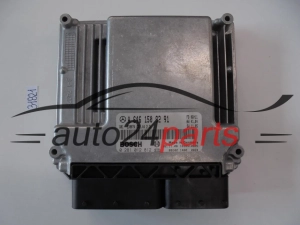
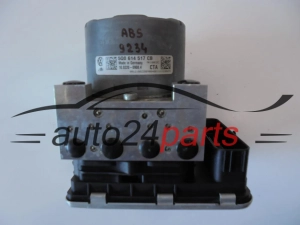
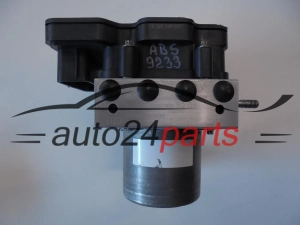
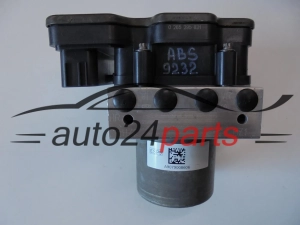
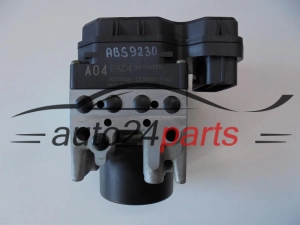
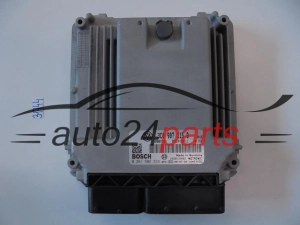
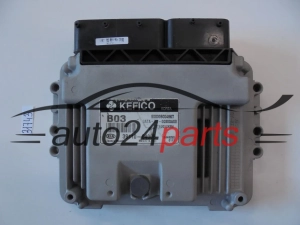
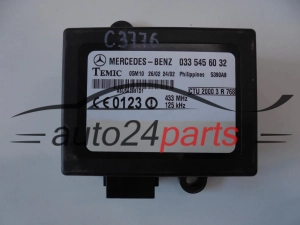
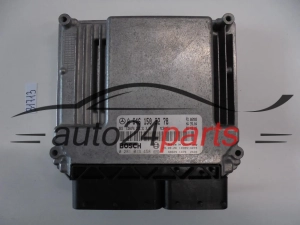
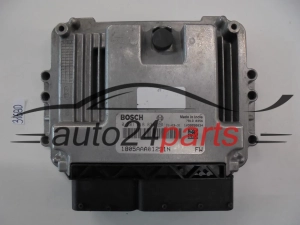
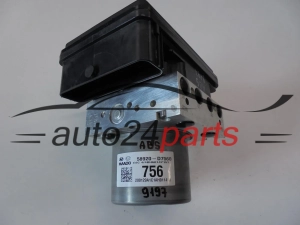
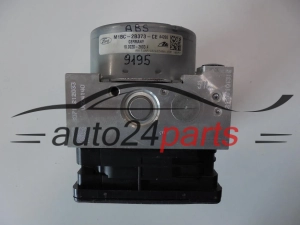
Automatic transmissions are incredibly complex mechanisms that require not only precise hydraulics to operate smoothly but, above all, intelligent management. This management is handled by the automatic transmission control unit (known as the TCU – Transmission Control Unit or TCM – Transmission Control Module). It is the true "brain" of the transmission, analyzing data from sensors (speed, engine RPM, throttle position) in fractions of a second to decide the optimal moment to shift gears.
When this crucial computer functions correctly, driving an automatic is a pure pleasure. Unfortunately, electronics have one deadly enemy: moisture. A flooded transmission control unit is one of the worst-case scenarios for a driver. It leads to immediate drivetrain problems and often to the complete immobilization of the vehicle.
Why does a transmission control unit get flooded?
It might seem that such an important component would be heavily protected against external factors. In practice, engineers place the TCU in various locations, many of which turn out to be exceptionally unfortunate over the years. How does water or fluid get inside a hermetically sealed housing?
-
Clogged windshield cowl drains and water in the cabin: This is a classic problem in many cars (for example, Audi A4, VW Passat), where the transmission controller is mounted under the passenger's or driver's floor carpet. Drains under the windshield clogged with leaves cause rainwater to overflow into the cabin. The passenger might not even realize that a pool is forming under their feet, slowly drowning the extremely expensive transmission computer.
-
Capillary action (fluid traveling through cables): It sounds unbelievable, but it is a very common cause of controller destruction. Transmission fluid from a leaking connector right at the gearbox, or coolant (for example, from a leaking valve), can "travel" inside the wiring harness insulation under pressure. The fluid can travel up to several dozen inches this way and force its way directly into the connector and the interior of the TCU, causing massive short circuits.
-
Pressure washing the engine bay: In cars where the controller is mounted under the hood, improper use of a pressure washer can damage the housing seal or force water directly into the pins of the communication connector.
-
Vehicle age and cracking seals: Rubber and silicone deteriorate over time. Temperature fluctuations, vibrations, and material aging cause the controller housing to lose its factory hermetic seal, allowing humid air from the environment inside, which then condenses on the motherboard.
How to recognize that the automatic transmission controller has been flooded?
Water and electronics are a volatile mix. A short circuit on the paths of the TCU motherboard triggers an immediate reaction from the car. The symptoms of damage are usually sudden and drastic:
-
Limp Mode (Fail-Safe Mode): The car locks into a single gear (usually second or third) and prevents further acceleration. A gearbox fault message appears on the dashboard.
-
Illuminated gear selector (PRNDS): On the display between the gauges, all the letters indicating the gear lever position light up in red or start blinking continuously.
-
Inability to engage a gear: Despite moving the lever, the transmission remains in neutral, and the car does not respond to the accelerator pedal.
-
Severe jerking: When trying to shift from P to D or from P to R, a very strong jolt is felt in the drivetrain, which does not happen with a properly functioning system.
-
No communication on the diagnostic computer: When a mechanic connects an OBD scanner, they cannot establish a connection with the transmission control unit – the computer is "dead."
Why is repairing a flooded controller a lottery?
When a driver finds out about flooded electronics, their first thought is usually: "I just need to dry and clean it." Unfortunately, in the case of modern motherboards, this is a myth.
A flooded controller undergoes rapid electro-corrosion. Even if the water is removed, deposits, greening paths, and micro-short circuits remain under the microscopic integrated circuits and the processor. Attempts to wash such boards in ultrasonic cleaners or re-solder damaged components rarely bring long-lasting results. Such a "resuscitated" computer might work for a week or two, and then suddenly cut off the drive while overtaking on the highway, creating a deadly hazard. The costs of electronic repairs are very high, and the guarantee of success is minimal.
A reliable and rational solution: Original, used transmission control unit
Instead of investing in uncertain repairs or spending a fortune on a new computer at an Authorized Dealership, the most logical and safest solution is to purchase a tested, original component from the aftermarket.
By choosing an original used controller from a dismantled vehicle, you get a component with a factory-intact housing seal. This guarantees that moisture has never gotten inside. The entire process involves matching a computer with identical hardware numbers and then cloning the software from your damaged module (or assigning it to the car using appropriate diagnostic equipment).
Restore your car's smooth gear shifting and full safety on the road. Do not risk driving with resuscitated electronics. You will find the best, thoroughly tested modules in our specialized store.
👉 Visit our offer and choose the right module for your car: Buy an original automatic transmission control unit – check availability at Auto24Parts
FAQ – Frequently Asked Questions: Flooded transmission control unit
1. I found water under the carpet and the transmission stopped working. Is it enough to put the controller on a radiator?
Definitely not. Simply evaporating the water will not fix the damage. When water (often dirty and full of road salt from shoes) comes into contact with live paths, immediate electrolysis and oxidation of connections on the motherboard occur. Drying will stop the corrosion process, but it will not bring the damaged, rusted paths back to life. The module is already physically broken.
2. Where is the transmission control unit hidden in my car?
Manufacturers use various solutions. The most common locations are:
-
Under the floor carpet: Under the driver's or passenger's feet (common in older Audi, VW, Porsche models). Very susceptible to flooding from clogged cowl drains.
-
In the engine compartment: Next to the engine control unit, often near the windshield cowl (exposed to moisture when washing the engine).
-
Directly on or inside the gearbox (Mechatronics): In modern DSG, S-Tronic, or 7G-Tronic transmissions, the controller is integrated with the valve body inside the transmission itself, bathed in transmission fluid. In their case, flooding with water does not occur, but they suffer damage from overheating or contaminants in old oil.
3. Where did the oil in the connector of the controller under the hood come from?
This is a classic example of capillary action. If the seal on the connector right at the gearbox gets damaged, hot pressurized oil forces its way between the copper wire cores and their insulation. It can travel the entire length of the wiring harness up to the TCU under the hood, flooding its interior. When replacing the controller, it is absolutely necessary to eliminate the source of the leak and thoroughly clean the entire wiring harness of the flooded oil.
4. How to choose a used controller to make sure it fits my car?
Selecting based on the car model and engine capacity is not enough. Transmissions have dozens of different software versions and internal designs. The key to success is the serial numbers. You must remove the flooded controller and write down the numbers from its rating sticker (both the hardware manufacturer's number, for example, Bosch, Siemens, Temic, and the original OE number of the car manufacturer). The numbers on the used controller you are buying must match 100%.
5. I bought a used controller with identical numbers. Can I just plug it in and drive?
In most cases, no. Modern TCU controllers are secured and assigned to a specific vehicle VIN and are part of the factory immobilizer (anti-theft system). After physically installing the new part, you must visit an automotive electronics specialist to download the software from the old, flooded controller and upload it to the new one (so-called cloning) or perform an adaptation using advanced diagnostic equipment. Only then will the car start, and the transmission will run without problems.