





Electronic Car Parts – ECUs, ABS, TCU and Body Modules
Electronic Car Parts – Control Units and Vehicle Modules
Auto24Parts offers used original electronic car parts for passenger cars, vans and selected commercial vehicles. The range includes engine control units, ABS modules and complete ABS pumps, transmission controllers, body control modules, instrument clusters, throttle bodies and accelerator pedal modules.
When choosing automotive electronics, the most important information is usually the complete OEM part number and the electronics manufacturer number. Bosch, Siemens, Continental, ATE, Magneti Marelli, Denso, Delphi and other manufacturers may produce several visually similar versions that are not necessarily interchangeable.
Browse the main categories: engine control units ECU, complete ABS pumps, ABS / ESP control units, automatic transmission control units and body and comfort modules.
If you are unsure which part is correct, send us a clear photo of the original module label so the numbers can be compared before purchase.
List of products


Μονάδα Ελέγχου Κινητήρα KIA CEED 1.4 CRDI BOSCH 0281032126 39140-2A800 391402A800 EDC17C57


Electronic Car Parts – OEM Control Units and Modules
Modern vehicles use multiple electronic control units to manage the engine, braking system, automatic transmission, body electronics, dashboard functions and driver inputs. A fault in one of these modules may cause anything from a warning light to a complete no-start condition.
The Electronic Car Parts category brings together the main groups of automotive controllers and electronic modules available at Auto24Parts. The parts are organised by function, manufacturer, vehicle make and part number to make identification easier.
Engine Control Units – ECU, ECM and PCM
The engine control unit is commonly referred to as ECU, ECM, engine computer or, in some vehicles, PCM. Depending on the vehicle and engine management system, it can control fuel injection, ignition, turbocharging, emissions-related functions and communication with other modules.
Typical manufacturers include:
- Bosch,
- Siemens,
- Continental,
- Delphi,
- Denso,
- Magneti Marelli.
For ECU identification, the full manufacturer number and OEM number are generally more useful than the vehicle model alone. Bosch numbers such as 0281..., 0261..., Continental or Siemens references such as 5WK..., S180... and A2C..., and vehicle-specific OEM references should be compared in full.
Depending on the ECU, a used replacement may require programming, adaptation, synchronisation with the immobiliser, preparation as a reusable unit or transfer of data from the original controller. There is no single procedure that applies to every ECU.
Available preparation methods are explained on the ECU preparation options page.
Complete ABS Pumps
A complete ABS pump normally consists of the hydraulic block together with its electronic ABS / ESP control unit.
When selecting a complete ABS assembly, it is useful to compare:
- vehicle OEM number,
- hydraulic unit number,
- electronic control module number,
- manufacturer markings such as Bosch or ATE.
Two ABS pumps may look identical externally but have different hydraulic or electronic versions.
For vehicles equipped with ATE systems, references beginning with families such as 10.02... and 10.09... can appear on different components of the assembly. The complete combination of numbers should therefore be checked rather than relying on one partial reference.
ABS / ESP / ASR Electronic Control Units
If only the electronic portion is required, visit ABS / ESP / ASR control units.
This category is different from a complete ABS pump. An electronic ABS controller is the electrical module attached to the hydraulic unit, whereas a complete pump normally includes both the electronics and hydraulic section.
Common Bosch number families include references beginning with 026510..., 026580..., 026595... and 027300.... The entire number should be checked before ordering.
An ABS or ESP warning light does not automatically mean that the electronic module has failed. Wheel-speed sensors, wiring, power supply, hydraulic faults and communication problems can cause similar symptoms.
Automatic Transmission Control Units – TCU, TCM and EGS
The automatic transmission control unit may be described as TCU, TCM or, in some vehicle systems, EGS.
These controllers manage transmission operation using information from the engine, gearbox sensors and other vehicle systems. Depending on the transmission design, the controller can be a separate electronic module or form part of a larger mechatronic assembly.
Common manufacturers and number families include:
- Bosch 026000...,
- Aisin references,
- Continental A2C...,
- Siemens 5WK...,
- Magneti Marelli transmission controllers.
Jerking, delayed gear engagement or limp mode do not by themselves confirm a faulty transmission controller. Hydraulic problems, sensors, wiring and mechanical transmission faults may produce similar symptoms.
Programming or adaptation requirements depend on the specific transmission and controller.
Body Control Modules – BCM, BSI, BSM, UCH, CAS and SAM
The car module and control unit category contains a broad range of body electronics and vehicle control modules.
Typical examples include:
- BCM – Body Control Module,
- BSI – body systems interface used in many PSA vehicles,
- BSM – engine-bay power and fuse module used in selected PSA vehicles,
- UCH – Renault body / cabin electronics module,
- CAS – BMW access and starting system module,
- SAM – Mercedes signal acquisition and actuation module,
- comfort and central electronics modules.
Depending on vehicle architecture, these modules may manage central locking, exterior and interior lighting, windows, wipers, starting authorisation, power distribution or communication between vehicle systems.
Some used modules contain vehicle-specific configuration or security data. For that reason, a replacement module may require coding, adaptation or data transfer, but this is not universal for every module.
Instrument Clusters and Dashboard Electronics
The instrument cluster category includes dashboard displays, gauges and complete cluster assemblies.
Depending on the vehicle, an instrument cluster may store vehicle configuration, identification data or other information. Some replacements can therefore require coding or adaptation.
Typical faults include:
- missing display segments,
- pixel failures,
- intermittent illumination,
- faulty gauges or stepper motors,
- complete loss of the display.
A speedometer fault does not automatically indicate a defective instrument cluster. Wheel-speed sensors, ABS systems and vehicle communication networks can also influence speed information.
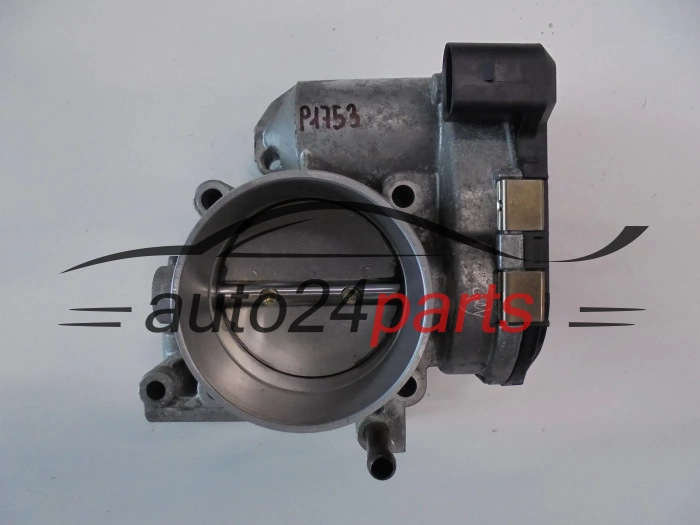
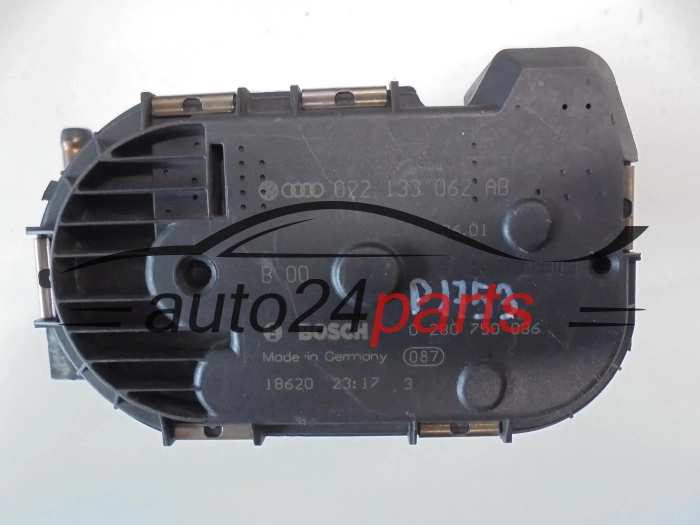
Throttle Bodies
The throttle body controls airflow into the engine in many petrol engines and performs different intake-management functions in selected diesel applications.
Common manufacturers include Bosch, VDO / Continental and Magneti Marelli. Typical number families include Bosch 028075..., VDO 408238... / 408239... and Continental A2C....
A contaminated throttle body can sometimes cause operating problems, but cleaning does not repair damaged electronics, position sensors, internal gears or an electric motor.
Throttle adaptation procedures depend on the vehicle and should not be assumed to be required for every replacement.
Accelerator Pedals and Pedal Position Sensors
The accelerator pedal potentiometer and pedal module sends the driver's acceleration request to the engine management system.
Modern pedal assemblies often use multiple position signals for safety and may use technologies other than a traditional mechanical potentiometer.
The accelerator pedal module should not be confused with the throttle body. The pedal reports driver demand, while the engine ECU determines how that request is applied.
How to Identify an Electronic Car Part Correctly
The safest way to identify automotive electronics is to compare the original module label.
Check:
- complete OEM part number,
- electronics manufacturer number,
- all suffix letters,
- HW / SW numbers where relevant,
- vehicle model and engine version as supporting information.
For example, two controllers can share the same number family or the same housing while having different final digits, software or hardware revisions. A partial match should therefore not be treated as proof of compatibility.
Search by Bosch, Siemens, ATE and Magneti Marelli Number
Manufacturer pages can help narrow the catalogue when the original module label clearly identifies the electronics supplier:
- Bosch automotive electronics
- Siemens automotive electronics
- ATE components
- Magneti Marelli components
Using the vehicle make together with the complete OEM and manufacturer number usually gives much more precise search results than searching only by vehicle model.
Programming, Coding and Cloning
A used electronic module does not always work immediately after installation, but programming is also not required for every component.
Depending on the type of part, possible procedures can include:
- coding to vehicle configuration,
- adaptation,
- immobiliser synchronisation,
- reset or preparation for reuse,
- VIN or configuration transfer,
- cloning data from the original module.
The required procedure depends on the vehicle, module type and electronics version.
Symptoms Do Not Always Confirm a Faulty Module
Many electrical faults can produce symptoms similar to a failed controller. Before replacing an ECU, ABS controller, TCU or body module, it is advisable to verify the vehicle-side installation.
Depending on the fault, this can include checking:
- power supply,
- ground connections,
- fuses and relays,
- connectors and damaged pins,
- CAN communication,
- sensors and actuators connected to the controller,
- water ingress or corrosion.
This reduces the risk of replacing a correctly functioning module when the actual fault is elsewhere in the vehicle.
Main Electronic Car Part Categories
- Engine Control Units – ECU / ECM / PCM
- Complete ABS Pumps
- ABS / ESP / ASR Control Units
- Automatic Transmission Control Units – TCU / TCM
- Car Modules – BCM / BSI / BSM / CAS / SAM / UCH
- Instrument Clusters
- Throttle Bodies
- Accelerator Pedals and Pedal Position Sensors
Ordering Electronic Car Parts from Auto24Parts
Before ordering, compare the original part numbers carefully. If you need assistance, contact Auto24Parts and send a clear photo of the complete label.
Additional information is available on the following pages:
FAQ – Electronic Car Parts and Control Modules
| Question | Answer |
|---|---|
| How do I identify the correct electronic module for my car? | Compare the complete OEM number and the electronics manufacturer number on the original module. The vehicle model and engine are useful supporting information, but should not replace the part-number comparison. |
| Is an ECU the same as an ECM or PCM? | The terms are often used for related engine or powertrain controllers, but their exact meaning depends on the vehicle manufacturer. The safest way to identify a replacement is by the complete part number rather than the abbreviation alone. |
| What is the difference between an ABS control unit and a complete ABS pump? | An ABS control unit is the electronic module. A complete ABS pump normally includes both the electronic controller and the hydraulic block with its pump and valves. |
| Does a used ECU always require programming? | No. Requirements depend on the ECU and vehicle. Some units require programming or immobiliser adaptation, while others may be prepared differently or have data transferred from the original controller. |
| What is ECU cloning? | ECU cloning means transferring the required data from an original controller to a compatible replacement unit. The exact data and procedure depend on the ECU type. |
| Does a replacement ABS module always need coding? | No. Some vehicles require coding or adaptation after replacement, while others use different procedures. Requirements depend on the ABS system and vehicle configuration. |
| What is the difference between a TCU and transmission mechatronics? | A TCU or TCM is the electronic transmission controller. Mechatronics usually refers to a larger assembly combining electronics with hydraulic components and control valves. |
| Can a faulty ECU cause a no-start condition? | Yes, but a no-start condition does not automatically prove that the ECU is faulty. Power supply, immobiliser, wiring, sensors and other systems should also be checked. |
| Can two modules with the same housing be different? | Yes. Modules may use identical housings and connectors while having different hardware, software or OEM references. Always compare the complete numbers. |
| What should I send to confirm compatibility? | Send a clear photo of the complete original module label. If available, also provide the vehicle model, production year, engine version and any additional HW or SW references visible on the unit. |